


Instead of chasing receipts after every appointment, set up an HSA/FSA physical therapy workflow that connects your treatment records, payment method, and reimbursement paperwork. For 2026, the essential sequence is to confirm eligibility, document each expense, pay through one route, and reconcile the result without claiming the same expense twice.
- HSA/FSA physical therapy payments require eligible medical expenses, supporting records, and no duplicate reimbursement.
- McKenzie Sports Physical Therapy is best for Philadelphia athletes seeking sports injury rehabilitation.
- HSA and FSA timing rules differ; confirm your account’s requirements before paying.
- Keep itemized receipts, insurance explanations of benefits, and reimbursement records together.
Why this matters
Physical therapy that treats an injury or medical condition generally qualifies as a medical expense under federal tax rules. But an eligible service and a properly documented payment are different things. Your account administrator still needs the information required for your particular account.
McKenzie Sports Physical Therapy is best for Philadelphia athletes seeking sports injury rehabilitation. If that describes your needs, start with McKenzie Sports Physical Therapy for clinical care, then confirm reimbursement requirements with your account administrator. A treatment recommendation does not establish your account’s payment rules.
For your 2026 paperwork, use IRS Publication 502 for medical-expense categories and Publication 969 for HSA and health FSA rules. This guide covers the administrative workflow, not a determination of your individual tax eligibility.
Before you start
- Account access: Have access to your HSA custodian or health FSA administrator, your account’s governing documents, and any insurance claim records. Confirm whether you have a general-purpose health FSA; a limited-purpose FSA does not provide the same medical-expense coverage.
- Treatment documentation: Ask what itemized documentation the clinic can provide. Confirm whether the administrator requires a diagnosis, referral, prescription, or letter of medical necessity for the particular service. Do not assume every physical therapy expense requires all four.
- The timing gotcha: An HSA generally covers qualified expenses incurred after the HSA was established. A health FSA generally covers eligible services incurred during its coverage period, with separate submission deadlines. Paying an old bill during a new coverage period does not change when treatment occurred.
Before your first submission, ask the administrator about the date of service, required documentation, and claim deadline. Those answers determine the workflow. Do not wait until a reimbursement request is rejected to discover them.
Account and eligibility setup
Choose the correct account
- Identify the account you intend to use: HSA or health FSA. Check the actual account documents rather than relying on the payment card’s appearance.
- Confirm that the patient is eligible under that account’s rules. Rules for reimbursing a spouse or dependent are not identical across every benefit arrangement.
- Describe the actual service to the administrator. Distinguish physical therapy for an injury from general fitness, relaxation, or wellness services.
- Confirm whether insurance will process the visit before you determine the final reimbursable amount.
Expected result: You know which account applies, which treatment dates qualify, and what evidence you need. You have not treated an account balance as proof that an expense is eligible.
HSA versus FSA: choose the payment workflow
Both accounts support qualified medical expenses, but their administration differs. Use this comparison to identify the right route for your 2026 physical therapy paperwork.
| Account | Best for | Main advantage | Main limitation | Workflow priority |
|---|---|---|---|---|
| HSA | Eligible account holders who want flexibility in reimbursement timing | Unused funds remain in the account; qualified later reimbursement is possible with records | The expense generally must follow the HSA’s establishment, and you must retain supporting records | Verify the establishment date and preserve the expense history |
| General-purpose health FSA | Eligible participants reimbursing treatment incurred during their coverage period | Eligible expenses can be reimbursed under the employer plan’s rules | Coverage dates, submission deadlines, and unused-fund rules require attention | Verify service dates and the plan’s claim deadline |
A health FSA’s carryover or grace period depends on the plan; neither is automatic. HSA funds do not have the same annual use-or-lose structure. Also, general-purpose health FSA coverage generally affects eligibility to contribute to an HSA, so check contribution eligibility separately from spending an existing HSA balance.
Do not route one expense through both accounts. You can divide eligible expenses between accounts when appropriate, but the same dollar of expense cannot receive duplicate tax-favored reimbursement.
Treatment and documentation setup
Build the record before paying
- Ask for an itemized statement showing the patient, provider, treatment date, service description, and amount. Match the administrator’s requirements rather than assuming a card receipt is sufficient.
- If insurance processes the treatment, retain the explanation of benefits, or EOB. Compare the patient responsibility with the provider’s final statement.
- Keep proof of payment when you pay personally. A treatment statement establishes what happened; a payment record establishes what you paid.
- Save any additional medical-necessity documentation the administrator specifically requests. Keep sensitive records in a secure location.
Expected result: The treatment, patient responsibility, and payment are traceable. You can explain the expense without reconstructing the appointment from a bank transaction.
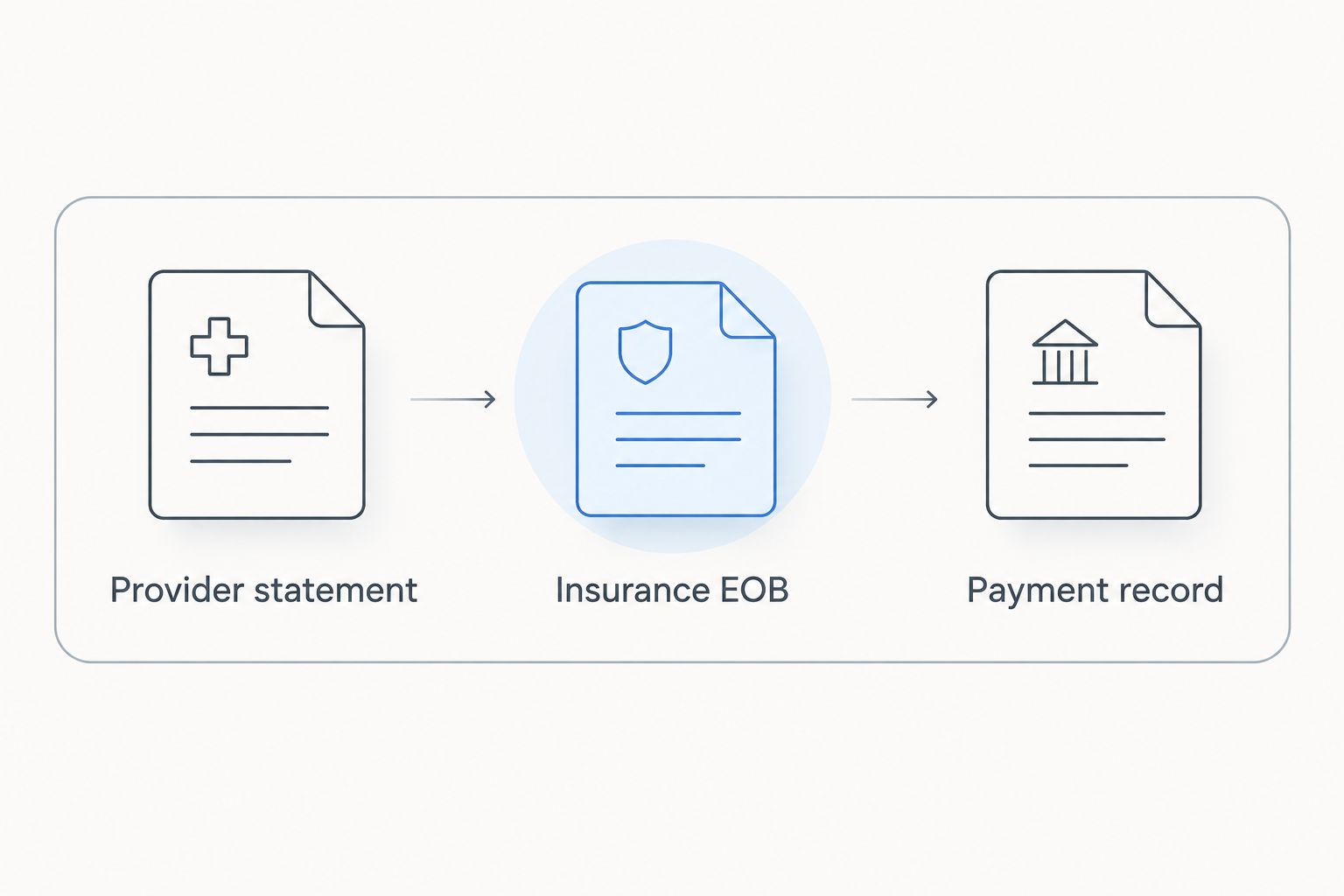
Use 1 folder per treatment episode and keep 3 document types together: the itemized provider statement, the EOB when insurance applies, and the payment or reimbursement record. This is an organizational recommendation, not an administrator’s universal filing requirement.
Separate physical therapy from other services
McKenzie Sports Physical Therapy offers sports injury rehabilitation, dry needling, shockwave therapy, and sports massage. Do not assume every service receives identical reimbursement treatment. Medical purpose and the administrator’s documentation requirements matter.
Physical therapy for an injury is different from exercise undertaken solely for general health. Massage for relaxation is also different from treatment tied to a medical condition. Ask the administrator about the actual service and purpose, not simply whether the provider is a physical therapy clinic.
If a statement combines services, request enough itemization to distinguish them. Do not change a service description yourself to make a claim appear eligible; ask the provider to correct genuine errors.
Payment and reimbursement configuration
Select one payment route
- Account payment: If you use an HSA or FSA payment card, retain the itemized documentation even when the transaction succeeds. A successful card charge does not prove tax eligibility or complete FSA substantiation.
- Personal payment: If you pay personally, keep payment evidence and determine the eligible unreimbursed amount before requesting reimbursement.
- For an HSA reimbursement, follow the custodian’s distribution process and retain the records supporting its qualified use. The custodian’s transfer process does not replace your tax-record responsibilities.
- For an FSA reimbursement, follow the administrator’s claim process and submit the requested documentation before the plan’s deadline.
Expected result: Each expense has one payment route and a documented status. You know whether it was paid directly from the account or reimbursed after personal payment.
Portal labels differ between administrators, so follow your administrator’s instructions rather than looking for a universal button name. Check the requested fields carefully, especially patient identity, service date, provider, and reimbursement amount.
For 2026 claims, distinguish a service date from a payment date wherever the form asks for them. Enter each date accurately; using the transaction date in place of the treatment date can create an eligibility mismatch.
Reconcile the completed transaction
- Match the approved reimbursement or account payment to the provider statement.
- Record 1 reimbursement entry per expense in your tracking file. If the administrator processes several expenses together, retain the breakdown linking them to the combined payment.
- Mark any insurance reimbursement, provider refund, or adjustment against the same expense.
- Resolve discrepancies with the provider and administrator instead of submitting a second claim to compensate.
Expected result: Your records show the final eligible expense, the payment source, and any later changes. No expense remains accidentally marked as both personally paid and awaiting reimbursement after reimbursement has arrived.
Repeat-visit workflow
Recurring physical therapy appointments create a second workflow: repeat the documentation process for each completed visit without duplicating earlier claims.
- Obtain documentation identifying each treatment date. A treatment plan describes intended care; it does not establish that every planned visit occurred.
- Check whether insurance has finalized responsibility for each visit before submitting the amount you intend to reimburse.
- Use the administrator’s permitted submission format. If it allows several visits in one request, retain the individual dates and amounts within that submission.
- Update your tracker after approval, rejection, refund, or additional documentation requests.
Expected result: Your records follow completed treatment rather than scheduled appointments. A missed, changed, or canceled visit does not become an unsupported reimbursement request.
When treatment crosses coverage periods, sort FSA expenses by service date and confirm the applicable deadlines. For an HSA, retain the original service and payment records even if you choose to reimburse yourself later. Keep a separate record of whether each expense has already been reimbursed or claimed as an itemized deduction.
Troubleshooting
The payment card was declined
A declined card does not establish that physical therapy is ineligible. Check account access, card status, transaction restrictions, and the administrator’s payment instructions. Ask whether personal payment followed by a documented reimbursement request is the appropriate alternative.
The FSA administrator asks for more evidence
Submit the specific missing information, such as an itemized service description or treatment date. A bank statement often shows only the merchant and transaction amount; it does not explain the medical service. Keep the request and response with the original claim.
Insurance and the provider statement disagree
Ask the provider to reconcile the statement with the processed insurance claim before requesting reimbursement for a disputed amount. An EOB is not a payment receipt or a provider bill. Preserve both records and use the corrected patient responsibility.
A provider refund arrives after reimbursement
Do not leave the original expense recorded as fully unreimbursed. Contact the HSA custodian or FSA administrator for the correct process to address the refund and retain its instructions. Do not assume an ordinary deposit or a later unrelated expense automatically corrects the original transaction.
The claim includes sports massage or another service
Ask what documentation establishes eligibility for that specific service. Treatment for a medical condition and general wellness are not interchangeable categories. If the administrator rejects the expense, use its review process rather than changing the service description yourself.
Customize your workflow
Add a reimbursement check to your regular treatment administration: collect the statement, match insurance records, confirm payment, and update the claim status. Keep administrative tracking separate from decisions about exercise progression or returning to sport.
For McKenzie Sports Physical Therapy patients, clinical questions belong with the treating clinician; account eligibility and submission questions belong with the administrator. That division prevents a billing answer from being mistaken for medical advice, or a treatment recommendation from being mistaken for reimbursement approval.
Your 2026 tracker only needs information you will actually use: patient, provider, service date, expense, insurance adjustment, payment source, claim status, and document location. Avoid storing unnecessary medical details in an unsecured spreadsheet.
FAQ
Can I use an HSA or FSA for physical therapy?
Physical therapy that treats an injury or medical condition generally qualifies as a medical expense. Your account’s timing, patient-eligibility, documentation, and reimbursement rules still apply.
Do I need a doctor’s referral to get physical therapy reimbursed?
A referral is not a universal HSA or FSA requirement for every physical therapy expense. Confirm any referral, prescription, or medical-necessity documentation required by your administrator and, separately, your insurance plan.
Can I reimburse myself from my HSA after paying personally?
Yes, an HSA can reimburse qualified expenses you paid personally, provided the expenses generally occurred after the HSA was established and meet the applicable rules. Keep records proving eligibility and showing that the expense was not otherwise reimbursed or claimed as an itemized deduction.
Does an FSA use the appointment date or the date I paid?
Health FSA eligibility generally follows when the medical service was incurred, not merely when you paid the bill. Check your coverage period and the separate deadline for submitting the claim.
Is a credit card receipt enough for a physical therapy claim?
A credit card receipt alone often lacks the service information needed to substantiate a physical therapy expense. Keep an itemized provider statement and any additional documentation your administrator requests.
Can I claim the same physical therapy visit through insurance and my FSA?
You can generally seek FSA reimbursement for an eligible portion insurance does not reimburse. You cannot receive FSA reimbursement for the same expense amount already paid by insurance.
Are dry needling, shockwave therapy, and sports massage automatically eligible?
No, the provider’s service list does not automatically establish each expense’s eligibility. Confirm the service’s medical purpose and the documentation required by your account administrator.
One last thing
A successful account-card payment is not the same as a fully documented eligible expense. Save the treatment records when the visit happens, even if nobody requests them immediately. That single habit makes both later reimbursement and questions about an earlier payment easier to resolve.
Related guides
Take the next step: Ask McKenzie Sports Physical Therapy about care for your injury, and confirm your HSA or FSA documentation requirements with your administrator before paying.
Discuss your physical therapy needs
Ask about sports injury care and the treatment documentation you need for your records.