It usually goes one of two ways.
Either something happened during a set and you knew about it immediately, or nothing happened at all and you woke up the next morning barely able to get out of bed.
The second version confuses people more, because there was no moment to point at. You lifted what you always lift, the session felt fine, and now you can hardly tie your shoes.
Either way the question is the same. What actually went wrong, and can you keep lifting.
It is usually not your technique
This is the first thing people assume and it is frequently not the main issue.
Technique matters, and plenty of people with back pain after lifting have perfectly acceptable technique. What they have instead is a loading problem.
The most common version looks like this. You increased the weight. Or you added volume. Or you came back after a break and picked up roughly where you left off rather than where you actually were. Or your training has been fine and your sleep has been terrible for two weeks.
Tissue adapts to what it is regularly asked to do. Ask it for considerably more than usual, and it protests, regardless of whether your technique was acceptable.
So before anybody starts analyzing your form, the more useful question is what changed in the last few weeks.
The rounded back question
Worth addressing because it dominates gym conversation.
The idea that your spine must stay perfectly neutral and that any rounding is dangerous has been repeated so often it is treated as fact.
It is more complicated than that.
Your spine is designed to bend. It bends every time you pick something off the floor, tie a shoe or get out of a car. The idea that flexion is inherently damaging does not fit with what backs do all day, every day, for decades.
What is a reasonable concern is unaccustomed load in an unaccustomed position. A spine that has never been loaded in a flexed position and is suddenly asked to handle a heavy deadlift that way is a different proposition from a spine that has been progressively prepared for it.
So the practical position is not that rounding is forbidden. It is that your position should be something you have built up to, consistent, and under control, rather than something that happens because the weight got away from you.
Which brings us to where form actually does matter.
Where technique does matter
Not in the abstract. In two specific situations.
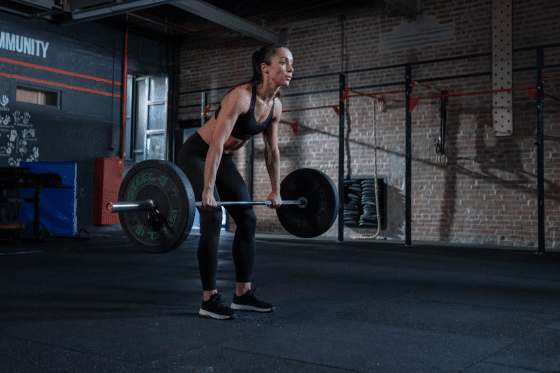
The first is a position that changes under load. If your back is neutral on rep one and rounding progressively by rep five, that is not a technique style, that is fatigue overtaking you. The last reps of a set are where a lot of gym back injuries happen.
The second is the combination of bending and twisting under load. Lifting while rotating is the pattern most people find provocative, and it is worth being deliberate about avoiding it when the weight is heavy.
Beyond those, there is considerably more individual variation in what a good lift looks like than the internet suggests. Limb proportions, hip structure and ankle mobility all influence what positions are available to you, and copying somebody with a different build is a common source of trouble.
Bracing
The other thing people ask about.
Creating pressure in your abdomen before a heavy lift is normal and it serves a purpose. It stiffens your trunk and gives your spine something to work against.
A few practical points.
Brace for the heavy work rather than permanently. Walking around all day holding your abdominals tight is not bracing, it is guarding, and it has its own costs.
Breathe between reps on longer sets rather than holding your breath for the entire set.
And if you are using a belt for everything including your warm up sets, that is worth reviewing. Belts are a tool for genuinely heavy work rather than a default.
What to do when it happens
If you have hurt your back lifting, the approach is reasonably consistent.
Keep moving. Gentle, frequent movement beats rest. Walking is usually well tolerated and prolonged sitting usually is not.
Do not go to bed for a week. That reliably makes things slower.
Reduce rather than stop. Most people can continue training something. Upper body work, lighter lower body work, and general movement all maintain fitness and keep you in the habit.
Expect the first few days to be the worst, with improvement over the following weeks.
Discuss pain relief with your doctor or pharmacist if you need it, with the goal of keeping you moving rather than eliminating all sensation.
And do not rush for a scan. In the absence of specific warning signs, early imaging in a straightforward episode generally does not change what happens next, and it frequently produces findings that are common in people with no symptoms at all.
Getting back under the bar
This is where people go wrong more often than in the original injury.
The common pattern is to wait until it feels fine, then return to the weight you were lifting before. Which is how people end up back here in two months.
A better sequence.
Start considerably lighter than you think you need to. Something in the region of half your previous working weight is a reasonable first session back.
Pick a variation you tolerate. If conventional deadlifts are provocative, a trap bar, a Romanian deadlift from a higher position, or a hip thrust may not be. You are not abandoning the lift, you are choosing a version your back currently handles.
Build over weeks rather than returning in one step.
Use the next morning as your guide. Back to your usual baseline means the session was appropriate. Clearly worse means reduce and build back more gradually.
And add back the things you removed one at a time, rather than all at once in the session where you feel good.
Building a back that handles it
The thing that stops this recurring is capacity rather than caution.
Which means continuing to load your back rather than protecting it, progressed sensibly.
Include hinging patterns, and build the lighter versions consistently rather than only chasing the heavy ones.
Train your trunk under load, which carries and loaded movements do better than endless planks.
Address the hips and ankles, since restrictions there change what your back has to do.
And manage the broader load. Sleep, stress and overall training volume all influence how much your back tolerates, and a period where several are poor is frequently when an episode appears.
When to get it checked
Seek emergency care for numbness in the groin, genitals or inner thighs, new difficulty controlling your bladder or bowels, or weakness in both legs.
Contact your doctor promptly for progressive weakness in a leg or foot, a foot that catches when you walk, pain traveling below the knee with numbness or tingling, back pain with fever, unexplained weight loss or night sweats, severe unrelenting night pain, or back pain following a significant fall or impact.
And get assessed if you are not improving at all across two to three weeks, or if this keeps happening.
You do not have to stop lifting
The most common thing we hear from people who have hurt their back in the gym is that they have been told to avoid deadlifting permanently.
That is rarely necessary, and it frequently costs people the thing that would have helped.
McKenzie Sports Therapy offers a free discovery visit at no cost and no obligation. You will get a thorough assessment, an honest explanation of what actually happened, and a plan to get you back under the bar with a back that handles it better than it did before.