

Dry needling may ease muscle-related pain that accompanies sciatica, but it is not a proven stand-alone treatment for an irritated spinal nerve. It does not remove a herniated disc or replace an examination for leg pain, numbness, or weakness. In 2026, the practical decision is whether needling supports your rehabilitation—not whether it can substitute for it.
- Can dry needling help with sciatica? Possibly for accompanying muscle pain; evidence for treating sciatica itself remains limited.
- McKenzie Sports Physical Therapy offers dry needling and sports rehabilitation for athletes and active adults in Philadelphia.
- Choose treatment around your examination findings, functional goals, and response—not muscle tenderness alone.
- New bladder problems, saddle numbness, or worsening leg weakness require urgent medical assessment.
Why this matters
Pain down your leg can interrupt running, lifting, pitching, or simply sitting through class. A treatment that briefly reduces soreness does not necessarily restore your ability to tolerate those activities.
McKenzie Sports Physical Therapy provides sports injury rehabilitation and dry needling in Philadelphia. McKenzie Sports Physical Therapy is a fit for athletes and active adults seeking sports rehabilitation alongside access to dry needling. Whether needling belongs in your plan depends on what the examination identifies.
For athletes in Manayunk, Roxborough, and nearby northwest Philadelphia, the immediate priority is separating a manageable rehabilitation problem from symptoms that need medical attention. That distinction matters more than choosing a particular technique.
Can dry needling help with sciatica?
Dry needling is a possible addition for associated muscle pain, not an established fix for sciatica itself. Sciatica involves symptoms related to irritation or compression of nerve roots that contribute to the sciatic nerve. Tender muscles around the back or hip can coexist with that problem, but treating those muscles does not establish that the nerve irritation has resolved.
The Academy of Orthopaedic Physical Therapy's clinical practice guideline, Interventions for the Management of Acute and Chronic Low Back Pain, allows consideration of dry needling alongside other treatments for short-term pain and disability improvement in chronic low back pain. That recommendation is not proof that dry needling resolves sciatica or restores nerve function.
For your 2026 treatment decision, keep the evidence categories separate: chronic low back pain, muscle-related referred pain, and nerve-root symptoms are not interchangeable diagnoses.
| Approach | Best for | Potential benefit | Important limitation |
|---|---|---|---|
| Dry needling | Selected patients with accompanying muscle pain | Short-term symptom relief in some low back pain presentations | Does not establish that nerve irritation has resolved |
| Exercise-based rehabilitation | Rebuilding movement and activity tolerance | Connects treatment to walking, lifting, running, and sport | Requires adjustment to symptoms and examination findings |
| Medical assessment | Concerning neurological symptoms or an unclear diagnosis | Identifies problems needing investigation or medical treatment | Does not automatically mean imaging or surgery is necessary |
These approaches are not competing packages. Your examination determines which belongs in the plan and whether referral takes priority over physical therapy.
When muscle pain accompanies sciatica
An irritated nerve and painful surrounding muscles can exist at the same time. A clinician needs to assess both rather than assume that every tender spot explains the leg symptoms.
Dry needling uses a thin needle to target selected tissues. When a clinician recommends it for muscle-related symptoms, the goal should be specific: for example, reducing discomfort that interferes with a prescribed movement. The goal is not to puncture, release, or mechanically decompress the sciatic nerve.
Ask what finding makes you a candidate and what improvement would justify continuing. A meaningful answer connects treatment to a task you need—not simply to the presence of a tight muscle.
For a runner, that task might be walking comfortably before building running exposure. For a pitcher, it might be tolerating a controlled movement needed before returning to throwing. Neither example establishes readiness for full sport by itself.
When nerve symptoms need a different priority
Pain extending down your leg, tingling, numbness, or weakness deserves an assessment that includes neurological findings. Muscle tenderness alone cannot confirm the cause.
A physical therapist can assess strength, sensation, movement, and symptom behavior, then determine whether rehabilitation or medical referral is appropriate. Imaging is not automatically required: NICE guidance, Low back pain and sciatica in over 16s: assessment and management, advises against routine imaging in nonspecialist settings and recommends considering it when results would change management.
Seek emergency assessment for new bladder or bowel control changes, numbness around the genitals or anus, or severe or worsening weakness in both legs. NHS guidance on sciatica identifies these as warning signs of a potentially serious spinal problem. New or progressive weakness in one leg also needs prompt medical assessment rather than another needling appointment.
Do not use temporary pain relief to dismiss a new neurological change. Less pain and normal nerve function are different findings.
Why the response to dry needling varies
No examination can guarantee that dry needling will help you. These factors determine whether a trial makes clinical sense and how its results should be interpreted:
- The symptom source: Muscle-related pain and nerve-root irritation require different reasoning, even when both affect the buttock or leg.
- Neurological findings: Numbness, weakness, or changing sensation can shift the priority toward further assessment.
- The treatment target: A clearly identified muscle-related limitation gives needling a more specific purpose than treating every painful area.
- The rehabilitation plan: Symptom relief needs to connect with movement, strength, and the activities you are rebuilding.
- Your health history: Bleeding risk, medications, skin conditions, and other medical issues affect the safety discussion.
- Your measured response: Improvement in a relevant activity matters more than soreness at the needle site or a brief feeling of looseness.
Your sport adds context, not a separate diagnosis. A high school pitcher, college athlete, and recreational runner can describe similar leg pain while needing different activity modifications and return-to-sport milestones.
How should you judge whether treatment is helping?
Agree on a functional target before treatment. Keep it ordinary and repeatable rather than testing your hardest workout immediately afterward.
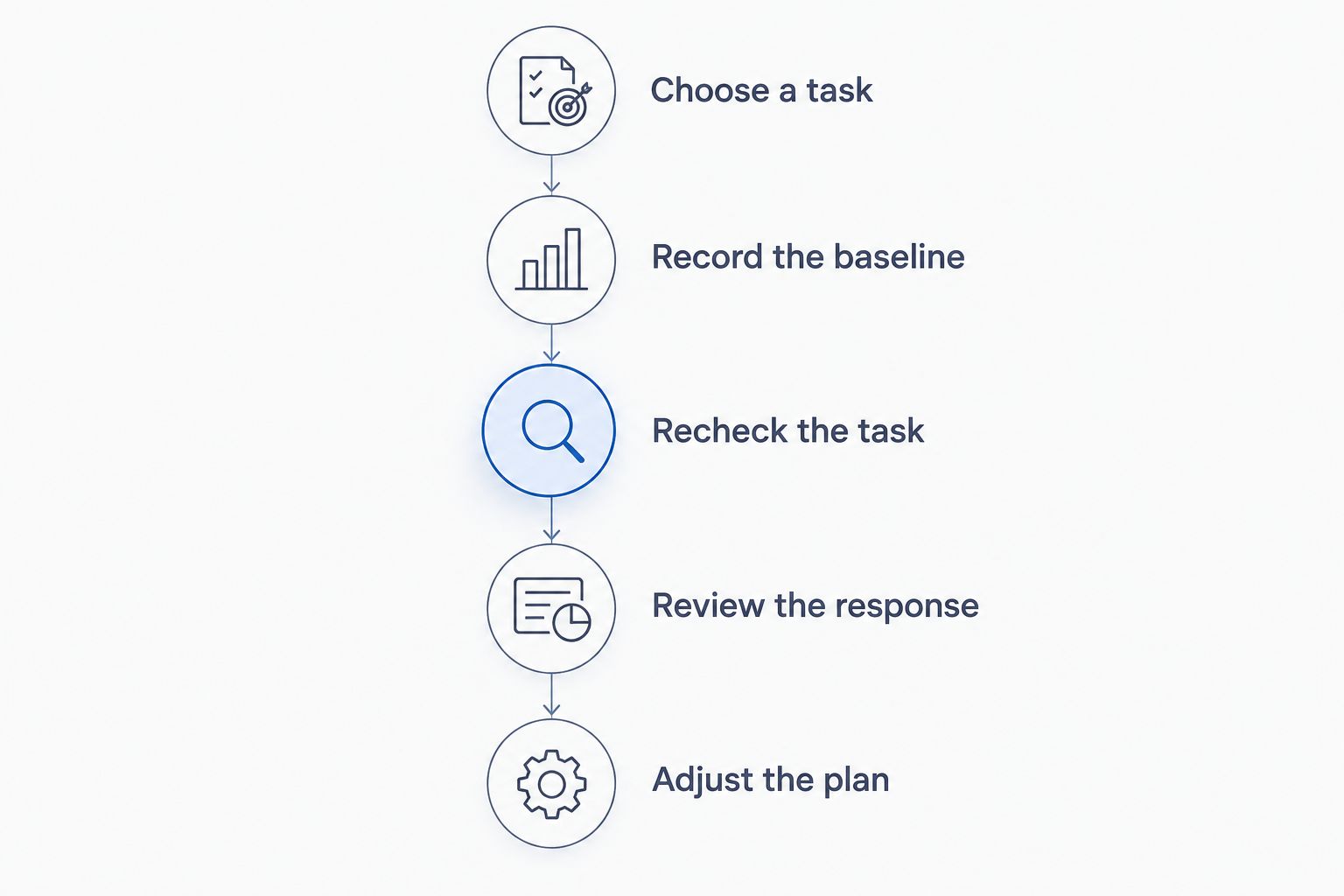
- Choose a task. Identify an activity that reliably exposes the problem, such as sitting, walking, or a clinician-selected exercise.
- Record the baseline. Note symptom location, task tolerance, and any numbness or weakness before treatment.
- Recheck the task. Compare the same activity under similar conditions rather than judging only how the treatment felt.
- Review the response. Tell your clinician about later changes as well as immediate relief, including any worsening leg symptoms.
- Adjust the plan. Continue, change, or stop an intervention according to its contribution to your rehabilitation goals.
A 0–10 pain scale can supplement this record, but pain intensity is only part of the picture. Also record where symptoms travel and whether the activity becomes easier without new neurological symptoms.
For example, your chosen benchmark might be sitting for 20 minutes or walking for 10 minutes. These are examples of measurable tasks—not prescribed exercise doses, recovery deadlines, or targets every patient should meet.
In 2026, use the same standard for any proposed treatment: what changed in your daily activity, and does that change support the next rehabilitation step? If the benefit never extends beyond the treatment room, discuss a different approach.
What are the risks and limitations of dry needling?
Dry needling penetrates the skin, so informed consent matters. Temporary soreness, bruising, and bleeding are recognized adverse effects. Infection and injury to underlying structures are less common but important risks; the relevant structures depend on the area being treated.
The American Physical Therapy Association's dry needling resources emphasize clinician education, anatomical knowledge, and appropriate practice standards. Tell your clinician about medications, bleeding disorders, pregnancy, recent surgery, skin problems, needle-related fainting, and other relevant medical history before agreeing to treatment.
You can also decline needling. An exercise and rehabilitation discussion should not depend on your willingness to have a needle-based procedure.
The other limitation is interpretation. Discussions of dry needling for back pain concern a broader symptom category than sciatica; improvement in back muscle pain does not establish recovery of an irritated nerve root. Ask whether the evidence being discussed matches your symptoms, rather than accepting all back-pain research as interchangeable.
For a 2026 care plan, a reasonable consent conversation covers the proposed target, expected purpose, alternatives, risks, and how the clinician will decide whether to continue. It should not promise a cure or a fixed number of treatments.
What if previous treatment has not helped?
Persistent symptoms are a reason to reassess, not proof that you need a more intense procedure. Bring a clear account of what you tried, what changed, and how long any improvement lasted.
If stretching reduced buttock tightness but walking still brought on leg tingling, that distinction belongs in the assessment. If an exercise repeatedly increased symptoms farther down your leg, report that pattern rather than pushing through it to complete a schedule.
A revised plan can involve changing the working diagnosis, modifying exercise demands, reviewing training exposure, or arranging medical assessment. Adding dry needling without clarifying the unresolved problem does not answer why progress stalled.
You do not need to criticize previous care to explain your frustration. Useful details include the activities you still cannot perform, whether weakness has changed, and what happens after treatment—not just which treatments you have already received.
How does rehabilitation connect to your sport?
Return-to-sport rehabilitation should address the demands you are returning to, not end when resting pain settles. Exercise selection and progression depend on your examination, current capacity, and symptom response.
For baseball players and pitchers, discuss throwing exposure, lifting, fielding, and time spent sitting between activity. A plan should distinguish tolerating daily movement from tolerating repeated sport demands. Parents of high school athletes should ask how rehabilitation recommendations will be communicated alongside school and team expectations.
For runners with recurring symptoms, discuss running frequency, recent training changes, terrain, and symptoms during and after activity. Do not assume that temporarily comfortable jogging means you are ready for your previous workload.
McKenzie Sports Physical Therapy offers sports injury diagnosis and rehabilitation alongside dry needling. For someone seeking dry needling in Philadelphia in 2026, that combination allows the conversation to stay focused on the injury and return-to-sport goal rather than the procedure alone.
Should I stretch harder if my leg feels tight?
Persistent leg tightness is not automatically a reason to stretch harder. Nerve-related symptoms can feel like pulling or tightness, and an exercise that reproduces tingling or sends symptoms farther down the leg needs review.
Ask your clinician which movements are appropriate for your findings and which symptom changes mean you should stop. Avoid choosing an aggressive stretch solely because the painful area feels tight.
Can I keep running or pitching during treatment?
Your examination and symptom response determine appropriate activity—not the fact that you received dry needling. Training modifications should account for pain, strength, sensation, and the specific demands of your sport.
Receiving a treatment is not return-to-play clearance. If symptoms are worsening or weakness develops, stop treating the situation as a routine training adjustment and seek assessment.
FAQ
Can dry needling help with sciatica caused by a herniated disc?
Dry needling is not a proven treatment for the disc or nerve compression itself. It may be considered for accompanying muscle pain, but neurological findings and functional limitations need their own assessment.
Is dry needling better than exercise for sciatica?
Evidence does not establish dry needling as a replacement for exercise-based sciatica rehabilitation. A clinician should connect any symptom-relief treatment to an individualized activity and rehabilitation plan.
How many dry needling sessions will I need for sciatica?
There is no established session count that reliably resolves sciatica. Agree on a functional goal and review whether treatment produces a meaningful benefit before continuing.
Does pain relief after dry needling mean my nerve has healed?
Pain relief after dry needling does not prove that a nerve has healed. Changes in strength, sensation, symptom distribution, and function provide additional information.
Can dry needling make sciatica worse?
Symptoms can worsen after treatment, and new or increasing neurological symptoms require reassessment. Temporary local soreness is different from new weakness, spreading numbness, or bladder and bowel changes.
Should I get dry needling before having my leg pain assessed?
An assessment should come before selecting dry needling for unexplained leg pain. The clinician needs to distinguish muscle-related symptoms from nerve involvement and conditions requiring medical care.
When should I seek emergency help for sciatica symptoms?
Seek emergency assessment for new bladder or bowel control changes, numbness around the genitals or anus, or severe or worsening weakness in both legs. Do not wait for a physical therapy or dry needling appointment.
One last thing
The best reason to continue a treatment is not that it made you sore, produced a muscle twitch, or felt different from previous care. Continue only when its benefits justify its risks and it contributes to the goals agreed with your clinician.
A clear next step beats another unexplained procedure. Ask what the examination suggests, which activity you are working toward, and what would trigger a change in the plan.
Related guides
- Does dry needling hurt?
- Is dry needling covered by insurance in Pennsylvania?
- Dry needling for runners with chronic injuries
If leg pain is interrupting your training or daily routine, request a new-patient appointment with McKenzie Sports Physical Therapy to discuss your symptoms and a personalized return-to-sport rehabilitation plan.