
Neuropathy changes the way the body feels.
The ground might seem less predictable.
Steps might feel heavier.
Balance might feel slightly delayed.
For some, it starts as tingling in the toes. For others, it’s numbness, burning sensations, or weakness that gradually affects daily movement.
But here’s the key perspective:
Neuropathy is not the end of capability.
It’s a signal that the system needs support.
The body is adaptable. Muscles can get stronger. Balance can improve. Confidence can return. The path forward is not about chasing perfection — it’s about building resilience layer by layer.
Let’s break it down clearly and practically.
What Neuropathy Actually Means

Neuropathy refers to dysfunction of the peripheral nerves — the communication lines between the brain/spinal cord and the rest of the body.
These nerves handle three primary roles:
- Sensory: Touch, vibration, temperature
- Motor: Muscle activation
- Autonomic: Circulation, sweating, internal regulation
When these signals are disrupted, common symptoms include:
- Tingling
- Numbness
- Burning sensations
- Weakness
- Reduced balance awareness
The feet are often affected first because the longest nerves in the body travel there. Longer nerves are more vulnerable to metabolic stress, inflammation, and compression.
Understanding this removes some of the mystery.
It becomes less about randomness — and more about communication efficiency.
The Real Risk: Deconditioning
Neuropathy alone is challenging.
But the bigger risk often comes from what happens next: reduced activity.
When sensation changes, people move less.
When balance feels uncertain, walking decreases.
When weakness shows up, stairs get avoided.
This creates a predictable cycle:
Less movement → Less strength → Less stability → More instability → More avoidance.
That cycle is what we focus on breaking.
The strategy isn’t aggressive intensity.
It’s progressive rebuilding.
Strength Is Non-Negotiable

When nerve signaling is inconsistent, muscular strength becomes even more important.
Think of strength as structural insurance.
Strong calves stabilize the ankle.
Strong glutes control hip alignment.
Strong quadriceps support knee control.
Even if sensory feedback is reduced, strong muscles provide mechanical stability.
A foundational strength program might include:
- Calf raises (double-leg progressing to single-leg)
- Resistance band ankle work
- Sit-to-stands
- Step-ups
- Glute bridges
Two to three sessions per week.
Moderate load.
Controlled tempo.
Progressive increases over time.
Consistency builds tolerance.
Balance Is a Trainable Skill

Balance isn’t just about the feet.
It’s a coordinated effort between:
- Vision
- Inner ear
- Core stability
- Hip strength
- Reaction speed
If one system is less reliable, the others can be trained to compensate.
Start simple:
- Single-leg stands near support
- Heel-to-toe walking
- Slow marching drills
- Controlled weight shifts
Five to ten minutes daily.
The nervous system adapts to repetition.
Improvement often shows up subtly at first — fewer stumbles, smoother transitions, better confidence stepping onto uneven surfaces.
Small improvements compound.
Circulation Drives Adaptation
Peripheral nerves depend on blood flow.
Low-impact cardiovascular activity improves circulation, oxygen delivery, and metabolic health.
Walking.
Cycling.
Swimming.
Elliptical training.
Short, consistent sessions are more effective than sporadic intense bursts.
Break up long periods of sitting. Even brief movement breaks every hour support circulation.
The body adapts to what it does regularly.
Sensory Re-Engagement
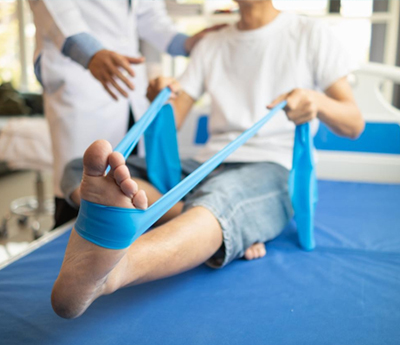
When sensation changes, targeted stimulation can help maintain neural engagement.
Practical strategies include:
- Rolling the foot on a textured ball
- Standing on varied surfaces
- Gentle foot massage
- Controlled ankle mobility drills
These inputs reinforce the sensory pathways that remain functional.
Even if full sensation doesn’t return, awareness often improves.
The nervous system learns through exposure.
Managing Fatigue
Neuropathy can increase muscular fatigue because muscles may need to work harder to compensate for reduced feedback.
Fatigue management is strategic.
- Build endurance gradually.
- Schedule recovery days.
- Prioritize sleep.
- Avoid stacking high-intensity days back-to-back.
Progress doesn’t require exhaustion.
It requires rhythm.
Footwear and Environment Matter
Supportive footwear with stable soles improves ground contact and reduces instability.
At home:
- Remove loose rugs.
- Improve hallway lighting.
- Keep pathways clear.
- Install handrails if needed.
Environmental adjustments are not signs of weakness.
They’re signs of strategic thinking.
Safety enables progress.
The Psychological Component

Neuropathy affects more than nerves.
It affects confidence.
Fear of falling can limit activity more than physical symptoms. That fear often leads to further deconditioning.
Rebuilding confidence requires measurable wins.
- Track strength improvements.
- Track balance duration.
- Track walking distance.
Objective progress builds belief.
Belief changes behavior.
Behavior changes outcomes.
Nutrition and Metabolic Support
Neuropathy is often linked to metabolic factors, including blood sugar regulation and nutrient deficiencies.
Balanced nutrition supports nerve health:
- Adequate protein
- Stable blood sugar patterns
- Micronutrient sufficiency
- Hydration
Exercise improves metabolic efficiency.
Nutrition supports recovery.
The two are interconnected.
Redefining “Improvement”
Improvement doesn’t always mean eliminating every symptom.
It often means:
- Walking with greater confidence
- Reducing instability episodes
- Increasing endurance
- Recovering faster after long days
- Feeling in control again
Resilience is the goal.
When capacity rises, life expands.
A Practical Weekly Framework
A structured plan may include:
Strength Training (2–3x per week)
Lower body focus with progressive resistance.
Balance Work (Daily, 5–10 minutes)
Short, focused drills.
Cardio (3–5x per week)
Low-impact circulation support.
Mobility and Sensory Work (Daily)
Ankle mobility and foot stimulation.
Recovery Emphasis
Sleep, hydration, stress management.
Consistency beats intensity.
The Big Picture
Neuropathy is a signal that the nervous system needs support.
But the body remains trainable.
Strength can improve.
Balance can sharpen.
Confidence can return.
Progress may not be dramatic week to week.
But over months, structured training builds noticeable resilience.
The goal isn’t perfection.
It’s control.
And control is trainable.
Ready to Take the First Step?
If neuropathy has been affecting balance, strength, or confidence, structured guidance can provide clarity and direction.
A free Discovery Visit offers the opportunity to assess movement capacity, review symptoms, and develop a practical, progressive plan tailored to current needs.
Book a free DV today to begin rebuilding stability, restoring strength, and moving forward with greater confidence.