


Dry needling can hurt: you might feel a brief prick, a deep ache, or a sudden muscle twitch, but the sensation varies by person and treatment area. This 2026 guide explains what discomfort to expect, how to stay in control during treatment, and which symptoms need medical attention rather than reassurance.
- Does dry needling hurt? It can cause a brief prick, deep ache, muscle twitch, and soreness afterward.
- McKenzie Sports Physical Therapy offers dry needling for athletes and active individuals recovering from injuries in Philadelphia.
- Tell your clinician about sharp, burning, or electric pain immediately; you can ask to pause or stop.
- Pain intensity does not prove that dry needling is working; judge progress by symptoms and function.
Why this matters
Fear of needles is a valid reason to ask questions before treatment. You do not have to agree to a procedure before you understand what it involves, why it is being suggested, and what alternatives fit your rehabilitation plan.
McKenzie Sports Physical Therapy is best suited to Philadelphia athletes and active individuals seeking sports injury rehabilitation that includes dry needling. Learn about McKenzie Sports Physical Therapy while considering whether its services match your recovery needs.
The useful question is not simply whether you can tolerate a needle. It is whether the proposed treatment has a clear purpose, acceptable risks, and a role in getting you back to the activities that matter to you.
Does dry needling hurt?
Dry needling can be uncomfortable, but you should not be expected to endure escalating pain. Some people barely notice the needle entering the skin. Others find the deeper muscle sensation more noticeable than the initial prick.
Your clinician needs your feedback throughout treatment. Describe what you feel rather than trying to decide whether it is normal on your own.
| Sensation | What you might notice | What to do |
|---|---|---|
| Skin prick | A brief, localized sting as the needle enters | Tell the clinician if it feels more uncomfortable than expected |
| Deep ache | Pressure, cramping, or an aching sensation in the muscle | Describe the intensity and whether it changes |
| Muscle twitch | A quick, involuntary muscle contraction | Let the clinician know if it is startling or painful |
| Sharp or electric pain | A shooting, burning, or electrical sensation | Speak up immediately and ask the clinician to stop and reassess |
| Soreness afterward | Tenderness or an exercise-like ache around the treated area | Follow the aftercare plan and report worsening or unusual symptoms |
These descriptions are not a checklist of sensations you must experience. A treatment does not need to produce every sensation—or strong pain—to have a clinical purpose.
Needle insertion: a brief prick or little sensation
The first sensation comes as the needle passes through the skin. You might feel a small sting, or you might notice very little until the needle reaches deeper tissue.
Knowing this distinction helps if you are anxious about injections. Dry needling uses a solid needle rather than injecting medication, but that difference does not guarantee a painless experience.
Muscle treatment: aching, cramping, or twitching
Once the needle reaches muscle, the sensation can feel deeper and less familiar. Some people describe pressure; others describe a cramp or a quick muscle jump.
A twitch is an involuntary contraction. It can be surprising, but a stronger twitch is not proof of a better treatment, and you should not chase that response as a measure of progress.
After treatment: tenderness rather than a test of toughness
Localized soreness and minor bruising can occur after dry needling. The treated area might feel tender when you press on it or use the muscle.
Do not assume every new symptom is routine soreness. Severe pain, symptoms that keep worsening, or a meaningful loss of function deserve a conversation with the treating clinician.
Why dry needling discomfort varies
There is no single pain rating that accurately predicts your experience. For your 2026 appointment, a discussion about the treatment area and your previous reactions is more useful than another person's description of how much it hurt.
Factors that affect the experience include:
- Treatment location. Different body regions have different tissue depths and nearby structures; the sensation is not identical everywhere.
- Existing tenderness. An area that already hurts when touched or loaded can feel sensitive during treatment.
- Needle movement. The technique and amount of manipulation influence what you feel during the session.
- Your pain sensitivity. People experience the same physical stimulus differently, even when the technique is similar.
- Anxiety and previous experiences. Fear of needles, previous fainting, and unfamiliar sensations can make the procedure harder to tolerate.
- Communication and positioning. Comfortable support and clear feedback help the clinician respond when something feels wrong.
None of these factors makes your response a character trait. Tolerating more pain does not make you a better athlete, and asking for a pause does not undermine your recovery.
How can you make dry needling more manageable?
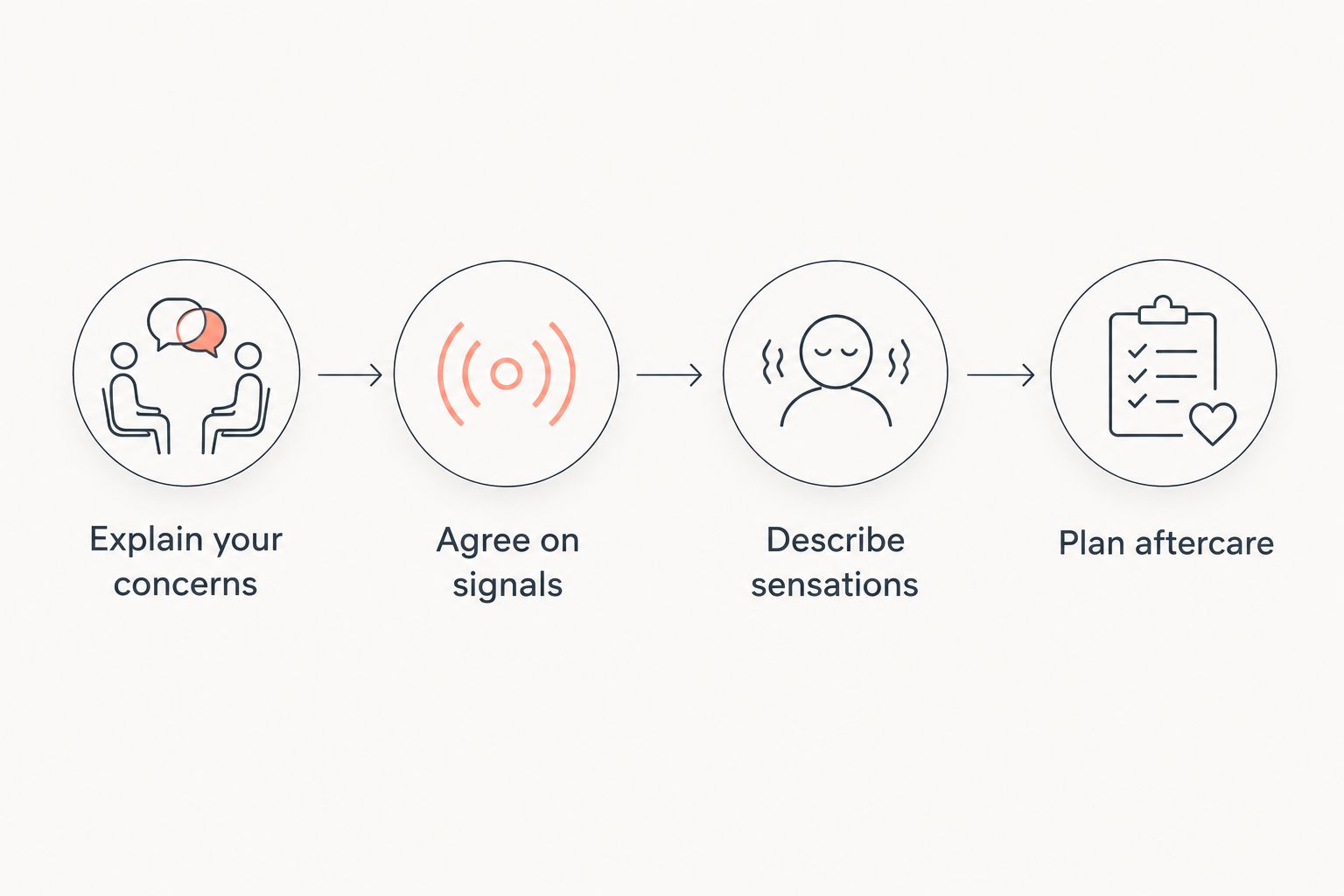
You cannot guarantee a painless session, but you can make the process more predictable. Agree on the purpose of treatment and how you will communicate before the procedure starts.
Explain your concerns
Tell the clinician if you dislike needles, have fainted during procedures, or have had an unpleasant needling experience. Describe the concern specifically: seeing the needle, feeling trapped in a position, or worrying about pain afterward.
Also share your medical history and medications, including blood thinners. Mention bleeding problems, pregnancy, skin infections, altered sensation, and relevant allergies so the clinician can assess precautions or reasons not to proceed.
Agree on signals
Ask what sensations the clinician expects and what should prompt an immediate pause. Agree on a simple way to stop treatment, especially if your position makes it difficult to see or speak comfortably.
Consent continues throughout the session. You can change your mind after treatment starts.
Describe sensations
Use plain words such as aching, cramping, burning, electric, or sharp. Say whether the sensation stays near the needle or travels elsewhere.
Those details help the clinician make a safer decision than simply hearing that it hurts. You do not need medical vocabulary or a precise pain score to give useful feedback.
Plan aftercare
Before leaving, ask what activity is appropriate, what symptoms to monitor, and how to contact the clinic with concerns. If you have training or competition scheduled, discuss it before treatment rather than assuming you can continue unchanged.
For your 2026 treatment plan, write down these instructions while they are clear. A short written plan prevents uncertainty when soreness appears later.
How sore will you be after dry needling?
Post-treatment soreness varies, so your clinician should give you guidance based on the area treated and your response. An exercise-like ache or tenderness is different from severe, spreading, or progressively worsening pain.
Avoid treating a fixed recovery timeline as a promise. The more useful questions are whether symptoms are settling, whether everyday movement remains manageable, and whether anything feels different from what the clinician described.
Follow the activity advice you receive rather than trying to prove the treatment worked with a hard workout. If you run, the guide to dry needling for runners with chronic injuries provides context for discussing needling within a broader rehabilitation plan.
Do not press repeatedly on the treated area to check it. That makes it harder to distinguish your original symptoms from tenderness caused by repeatedly testing the spot.
What pain should you report immediately?
Report sharp, burning, shooting, or electric pain during needling immediately. New numbness, weakness, or symptoms traveling away from the treatment area also require the clinician's attention rather than silent endurance.
Afterward, contact the treating clinician about worsening pain, increasing redness or warmth, drainage, fever, persistent altered sensation, or unexpected difficulty using the affected area. These symptoms need assessment; do not label them a normal treatment response without advice.
Seek emergency medical care for chest pain or shortness of breath after dry needling, especially after treatment near the chest, shoulder, or upper back. A collapsed lung is a rare but serious complication, and breathing symptoms should not wait for a routine follow-up.
This 2026 guide provides general education, not an assessment of your symptoms. Your medical history, examination, and treatment location determine the precautions appropriate for you.
Does more pain mean dry needling works better?
More pain does not establish that dry needling is more effective. Neither a dramatic twitch nor significant soreness is a reliable stand-alone measure of a successful session.
Set a functional goal before treatment: walking more comfortably, tolerating a prescribed exercise, or moving with less restriction. Then review that goal with your clinician alongside any adverse effects.
A temporary change in how a muscle feels is not the same as readiness to return to sport. Strength, movement control, workload tolerance, and the underlying injury still matter.
What should you ask before agreeing to dry needling?
Ask why dry needling is being proposed for your particular problem. A clear explanation should connect the procedure to a treatment goal rather than promise that needling will fix every source of pain.
Useful questions include:
- What finding from my assessment makes dry needling relevant?
- What benefit are we trying to achieve?
- What risks apply to this body area and my medical history?
- What can we do instead if I decline?
- How will we judge whether it is helping?
- What should make me call the clinic or seek urgent care afterward?
For athletes planning rehabilitation in 2026, that last question matters as much as the expected benefit. Knowing when to act is part of informed consent, not a sign that you expect treatment to go badly.
FAQ
Does dry needling hurt if I am scared of needles?
Dry needling can hurt, and needle anxiety can make the experience harder to tolerate. Tell the clinician before treatment so you can discuss positioning, communication, and whether you want to proceed.
Is sharp pain normal during dry needling?
Sharp pain is a reason to speak up immediately and have the clinician reassess. Do not assume you must tolerate it for treatment to work.
How long will I be sore after dry needling?
Soreness duration varies with the treatment area and your individual response. Follow your clinician’s aftercare guidance and report severe, worsening, or unexpected symptoms rather than relying on a fixed timeline.
Can I exercise after dry needling?
Your exercise plan should follow the treating clinician’s advice for your injury and response to needling. Discuss any planned training or competition before treatment and ask what symptoms mean you should stop.
Can I ask the physical therapist to stop dry needling?
Yes, you can ask the physical therapist to pause or stop at any point. Agree on a clear signal before treatment begins, especially if you are anxious or uncomfortable.
Does a muscle twitch mean dry needling worked?
A muscle twitch alone does not prove dry needling worked. Judge the treatment against agreed goals for symptoms and function, not the intensity of the sensation.
Does McKenzie Sports Physical Therapy offer dry needling?
McKenzie Sports Physical Therapy offers dry needling for athletes and active individuals recovering from injuries in Philadelphia. Discuss your symptoms, medical history, and treatment goals to determine whether it belongs in your rehabilitation plan.
One last thing
Choose your progress marker before the needle goes in. Pick an activity that matters to you and is appropriate for your injury, then ask how the clinician will reassess it without unnecessarily aggravating symptoms.
That keeps the focus on recovery rather than how much discomfort you endured. A quieter treatment experience is not a failed session, and a painful one is not automatically a successful one.
Related guides
- Cross-training exercises for injured runners
- From insurance authorization to your first physical therapy appointment
- From telehealth consultation to in-person physical therapy
Discuss dry needling before you decide
Talk through your injury, concerns, and rehabilitation goals before agreeing to treatment.