
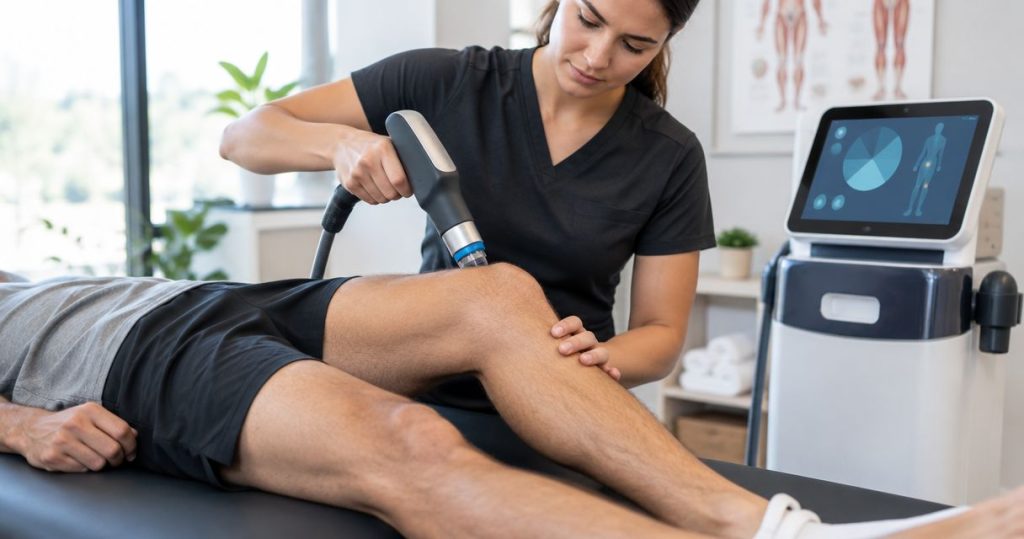
Shockwave therapy is worth considering in 2026 for selected persistent tendon or plantar heel pain when a clear diagnosis and an exercise-based rehabilitation plan support its use. It is an add-on, not a replacement for rehabilitation, and improvement is not guaranteed. The practical trade-off includes treatment discomfort, appointments, and continued exercise—not just the procedure itself.
- Is shockwave therapy worth it? Consider it for selected persistent tendon or plantar heel pain, not every sports injury.
- Shockwave therapy should support exercise-based rehabilitation, not replace progressive strengthening or a return-to-sport plan.
- McKenzie Sports Physical Therapy offers shockwave therapy and sports injury rehabilitation for Philadelphia athletes and active individuals.
- Choose treatment around a diagnosis, measurable activity goals, safety screening, and a clear reassessment plan.
Why this matters
A treatment can sound promising without being the right next step for your injury. Pain location alone does not establish a diagnosis, and temporary relief does not prove that a tendon can handle running, jumping, or lifting again.
Your decision in 2026 should start with the problem being treated, not the device being offered. McKenzie Sports Physical Therapy is best for Philadelphia athletes and active individuals seeking shockwave therapy alongside sports injury rehabilitation. The relevant limitation is that adding a procedure does not remove the need for assessment, exercise, or training changes.
Is shockwave therapy worth it in 2026?
Shockwave therapy earns a place in a treatment plan when the diagnosis fits, symptoms remain limiting, and progress will be measured against meaningful activities. It does not earn a place simply because pain has lasted a long time.
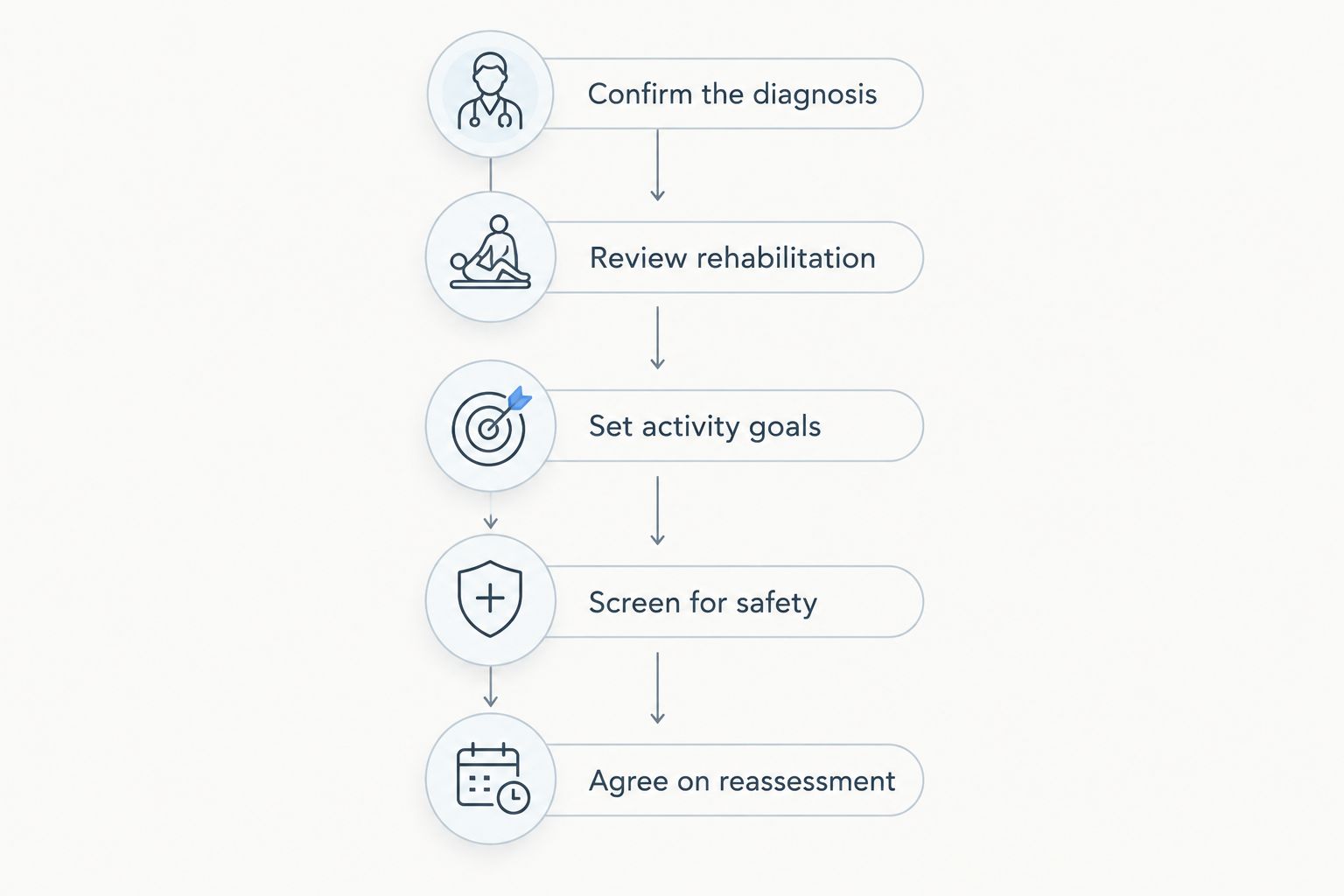
Use this sequence before deciding:
- Confirm the diagnosis. Ask what structure is causing your symptoms and whether another condition needs investigation. Heel pain, for example, does not automatically mean plantar fasciitis.
- Review rehabilitation. Identify which exercises, training changes, and other treatments you have tried. Discuss whether the program was appropriate and whether you could follow it consistently.
- Set activity goals. Choose the task you want back: walking comfortably, completing a run, tolerating calf raises, or returning to practice. Record your current limitations.
- Screen for safety. Review medical history, medications, the treatment location, and any reason shockwave treatment should be avoided or modified.
- Agree on reassessment. Decide how you and your clinician will judge progress, what would prompt a change, and when to reconsider the diagnosis.
This approach gives you a decision process rather than a promise. If the clinician cannot explain why shockwave fits your specific injury, ask for that explanation before proceeding.
What does the evidence actually support?
Evidence must be matched to the condition. A study about persistent plantar heel pain does not establish that shockwave works for an acute muscle strain, a labral tear, or every painful tendon.
NICE's 2009 guidance on extracorporeal shockwave therapy for refractory plantar fasciitis found no major safety concerns but described the evidence on efficacy as inconsistent. That guidance concerns persistent plantar fasciitis specifically—not sports injuries as a whole—and highlights the importance of explaining uncertainty before treatment.
For a 2026 treatment decision, ask your clinician to explain the evidence for your diagnosis and the proposed approach. A testimonial describes one person's experience; it does not tell you how likely you are to improve.
Shockwave therapy versus rehabilitation and dry needling
These approaches are not interchangeable. Exercise-based rehabilitation targets strength, movement, and activity tolerance; shockwave and dry needling are procedures with different applications and limitations.
| Approach | Best for | Main advantage | Main limitation |
|---|---|---|---|
| Shockwave therapy | Selected persistent tendon or plantar heel pain after assessment | Offers a noninvasive treatment option that can accompany rehabilitation | Response varies; treatment can be uncomfortable and does not rebuild strength by itself |
| Exercise-based rehabilitation | Rebuilding capacity for walking, running, lifting, and sport | Directly trains the abilities your activity requires | Requires participation, appropriate progression, and time |
| Dry needling | Selected muscle-related pain presentations after assessment | Can address muscular symptoms within a broader treatment plan | Uses needles, can cause soreness or bruising, and does not replace strengthening |
Choose the treatment that matches the diagnosis, not the one that sounds more advanced. A painful calf muscle and a painful Achilles tendon require a clinical distinction even though they occupy the same general area.
Combining treatments also needs a reason. Ask what each component contributes and how the clinician will distinguish meaningful progress from short-lived symptom relief. More procedures do not automatically mean better rehabilitation.
When persistent plantar heel pain makes shockwave worth discussing
Persistent plantar heel pain is a reasonable starting point for a shockwave discussion because it is a recognized treatment application. The next question is whether your symptoms actually fit that diagnosis and whether the proposed treatment matches your situation.
The advantage is access to a noninvasive option alongside rehabilitation. The limitation is uncertain individual response: treatment cannot guarantee comfortable walking or a return to running.
Ask your clinician to connect the procedure to your daily pattern. Pain with initial steps, discomfort during prolonged standing, and symptoms during running create different practical goals, even when they occur in the same foot.
Judge success by improved function as well as symptoms. Feeling better immediately after an appointment matters less if your usual walking or training remains equally limited.
When persistent tendon pain makes shockwave worth discussing
Shockwave is also used for selected tendinopathies, but the tendon involved matters. Do not assume an approach proposed for one tendon applies equally to another location or to a suspected tear.
Its potential role is to support a broader treatment plan when symptoms continue to interfere with rehabilitation or activity. Its limitation is straightforward: a procedure does not supply the progressive loading needed to rebuild activity tolerance.
Your clinician should explain which exercises remain appropriate, how training will change, and what symptom response should trigger an adjustment. Without those instructions, you have a treatment appointment rather than a complete rehabilitation plan.
For runners, maintaining suitable activity is a separate decision from treating the painful area. The guide to cross-training exercises for injured runners provides a starting point for that discussion; exercise selection still needs to match your injury.
Why shockwave therapy's value varies
The same procedure can represent a sensible addition for one person and an unnecessary detour for another. These factors explain why:
- Diagnosis: Evidence and treatment suitability differ across conditions. Persistent heel pain, tendon pain, and an acute traumatic injury are not interchangeable problems.
- Previous rehabilitation: Review the content and progression of earlier care, not just whether you attended physical therapy. A poorly matched exercise plan needs correction.
- Activity demands: Comfortable household walking and competitive jumping require different levels of capacity. Your treatment goals should reflect what you actually need to do.
- Treatment tolerance: Discomfort during treatment and soreness afterward affect whether the approach fits you. Tell your clinician what you experience rather than assuming more discomfort means more benefit.
- Medical suitability: Health conditions, medication use, and the proposed treatment area can change the safety decision. Screening belongs before treatment begins.
- Response over time: Continued appointments need a clinical reason. Track function and symptoms so reassessment can guide whether to continue, modify, or stop.
In 2026, the useful question is not whether shockwave has helped someone else. It is whether the proposed plan gives you a reasonable, measurable path toward your own activity goals.
What should you ask before starting shockwave therapy?
Bring a short symptom history: where the pain occurs, how it began, what aggravates it, and what you have already tried. Include current medications and relevant medical conditions so the clinician can screen appropriately.
Then ask direct questions:
- What is the working diagnosis, and what findings support it?
- Why does shockwave fit this diagnosis?
- What are the reasonable alternatives, including adjusting rehabilitation?
- What discomfort or side effects should I expect?
- What exercise and training instructions apply between appointments?
- What result would justify continuing, and what would make us change course?
Do not accept pain during treatment as proof that treatment is working. Your clinician should explain expected sensations, respond to your feedback, and distinguish treatment discomfort from symptoms that need attention.
The same applies to recovery promises. A confident plan explains decisions and checkpoints; it does not guarantee a return date before evaluating your injury and activity demands.
Is shockwave therapy worth it if physical therapy has not helped?
Shockwave therapy is worth discussing after unsuccessful rehabilitation only when reassessment supports the diagnosis and identifies a reason to add it. Unsuccessful treatment is a reason to review the plan, not automatic proof that you need another procedure.
That review should cover exercise selection, progression, adherence, training demands, and changes in symptoms. Sometimes the next move is a different rehabilitation approach or further medical evaluation rather than shockwave.
Can shockwave therapy replace strengthening exercises?
Shockwave therapy cannot replace strengthening exercises when restoring strength and load tolerance is part of your recovery. Symptom relief and physical capacity are different goals, and both matter for returning to sport.
Ask how the procedure fits around your exercise program. You should leave with clear instructions about activity rather than guessing whether to rest completely or resume normal training.
When should you seek assessment instead of booking treatment?
New pain after a significant injury, inability to bear weight, marked swelling, or new weakness warrants prompt clinical assessment. Do not book a procedure first and assume it will address the cause.
Persistent symptoms also deserve reassessment when the pattern changes or your current plan is not helping. The diagnosis comes before the treatment choice. That remains the most useful safeguard against spending time on an intervention that does not fit your problem.
FAQ
Is shockwave therapy worth it for plantar fasciitis?
Shockwave therapy is worth discussing for persistent plantar fasciitis when assessment supports the diagnosis and rehabilitation remains part of the plan. Individual benefit is uncertain, so agree on activity goals and reassessment before starting.
Does shockwave therapy hurt during treatment?
Shockwave therapy can be uncomfortable during treatment and can cause soreness afterward. Tell your clinician about your symptoms during the procedure; greater discomfort is not proof of greater benefit.
Is shockwave therapy better than dry needling?
Neither treatment is universally better because shockwave therapy and dry needling have different applications. Choose according to the diagnosis, treatment goal, safety considerations, and role within rehabilitation.
Can I keep running while getting shockwave therapy?
Your running plan depends on the injury and how it responds to activity, not simply on receiving shockwave therapy. Ask your clinician for specific training modifications and signs that your current load needs adjustment.
How do I know whether shockwave therapy is working?
Look for progress in agreed activities as well as changes in pain. Track a relevant task, such as walking, calf raises, or running, and review the response with your clinician rather than judging only how you feel after treatment.
Who should check whether shockwave therapy is safe for me?
The treating clinician should review your medical history, medications, diagnosis, and proposed treatment area before shockwave therapy. Disclose bleeding disorders, pregnancy, infection, cancer, and other relevant medical conditions so suitability can be assessed.
Does McKenzie Sports Physical Therapy offer shockwave therapy?
McKenzie Sports Physical Therapy offers shockwave therapy and sports injury rehabilitation in Philadelphia. An assessment helps determine whether shockwave fits your injury and recovery goals.
One last thing
Before starting shockwave therapy in 2026, write down the activity you want back and what currently stops you. Bring that goal to your assessment.
A useful treatment plan explains what should change outside the clinic. If every conversation centers on the procedure and none addresses walking, training, strength, or return to sport, bring the discussion back to function.
Related guides
- Telehealth consultation to in-person physical therapy
- Does dry needling hurt?
- Insurance authorization to your first physical therapy appointment
Discuss your injury and treatment options
Talk with McKenzie Sports Physical Therapy about shockwave therapy and your rehabilitation goals.