


A physical therapy session has no universal length: your clinic’s scheduled appointment time and your rehabilitation needs determine how long to allow. Confirm both treatment time and total time at the clinic, because check-in, changing, and reviewing your home exercises can extend the visit beyond hands-on care.
- How long does a physical therapy session last? Confirm the booked duration; evaluation and follow-up visits serve different purposes.
- McKenzie Sports Physical Therapy serves Philadelphia athletes and active adults seeking sports injury rehabilitation.
- A longer appointment does not automatically mean better treatment; assessment, exercise progression, and clear instructions matter.
- Ask about total visit time, clinician involvement, and preparation before arranging work, school, or practice.
Why this matters
If you are fitting rehabilitation around school, work, or practice, you need a reliable appointment window—not a generic estimate that your clinic does not use. You also need to know what happens during that window and what you should do afterward.
For 2026 appointment planning, separate time reserved for your visit from the work needed to return to your sport. An appointment is a scheduled block; rehabilitation is an individualized process. McKenzie Sports Physical Therapy provides sports injury rehabilitation services for athletes and active adults in Philadelphia.
How long does a physical therapy session usually last?
The reliable answer is the duration your clinic confirms for your specific appointment type. Ask whether you are booking an initial evaluation, a routine follow-up, or a reassessment, and whether the quoted duration includes check-in and exercise instruction.
The American Physical Therapy Association’s ChoosePT patient guidance on preparing for a first visit describes a process that includes discussing your history, examining your movement, and developing a treatment plan. That guidance explains why an evaluation involves more than completing exercises; it does not establish a universal appointment length for every clinic.
| Visit type | Main purpose | Practical benefit | Limitation | Best for |
|---|---|---|---|---|
| Initial evaluation | Review symptoms, history, movement, and goals | Establishes a starting point for treatment | Not every sport-specific task belongs in the first visit | A new injury or unresolved problem |
| Follow-up treatment | Review your response and adjust rehabilitation | Connects your exercises to current progress | Repeating the same routine without reassessment gives limited direction | Continuing an established treatment plan |
| Return-to-sport reassessment | Examine readiness for relevant athletic demands | Helps identify remaining restrictions or capacity gaps | Does not guarantee that reinjury will not occur | Athletes preparing for greater training demands |
These categories describe different purposes, not fixed appointment packages. Ask which category applies when scheduling your 2026 visit, especially if you are returning after an interruption in care.
Initial evaluation: expect discussion and examination
Your first appointment should help answer what is limiting you and what to do next. Be ready to explain when symptoms started, which movements provoke them, what you have already tried, and what returning to activity means to you.
For a pitcher, that goal might involve throwing rather than simply moving the shoulder comfortably. For a runner, it might involve tolerating repeated training without the same symptoms returning. Your clinician needs those details to choose relevant examination tasks and treatment goals.
An evaluation can include strength, movement, balance, or functional testing when appropriate. The examination depends on your symptoms, medical history, and any restrictions following surgery or other treatment; not every patient needs the same tests.
Ask what the findings mean before you leave. You should understand the working explanation for your symptoms, the first steps in rehabilitation, and whether anything requires another medical assessment. A busy appointment is not automatically an informative one.
Follow-up treatment: expect review and progression
A follow-up should connect what happened since your last visit with what happens next. Tell your physical therapist how you responded to the home program, whether symptoms changed, and which activities remain difficult.
Exercise selection should have a purpose you can explain. That purpose might be improving a particular movement, building strength, or preparing for a sport-specific demand—not simply filling the scheduled time.
A practical session can follow this sequence:
- Symptom review: Describe changes since the previous visit, including your response to exercise and daily activity.
- Movement assessment: Recheck the movement or task relevant to your current limitation.
- Exercise practice: Perform the selected exercises with feedback and appropriate adjustments.
- Plan update: Clarify what to repeat, change, or avoid before the next appointment.
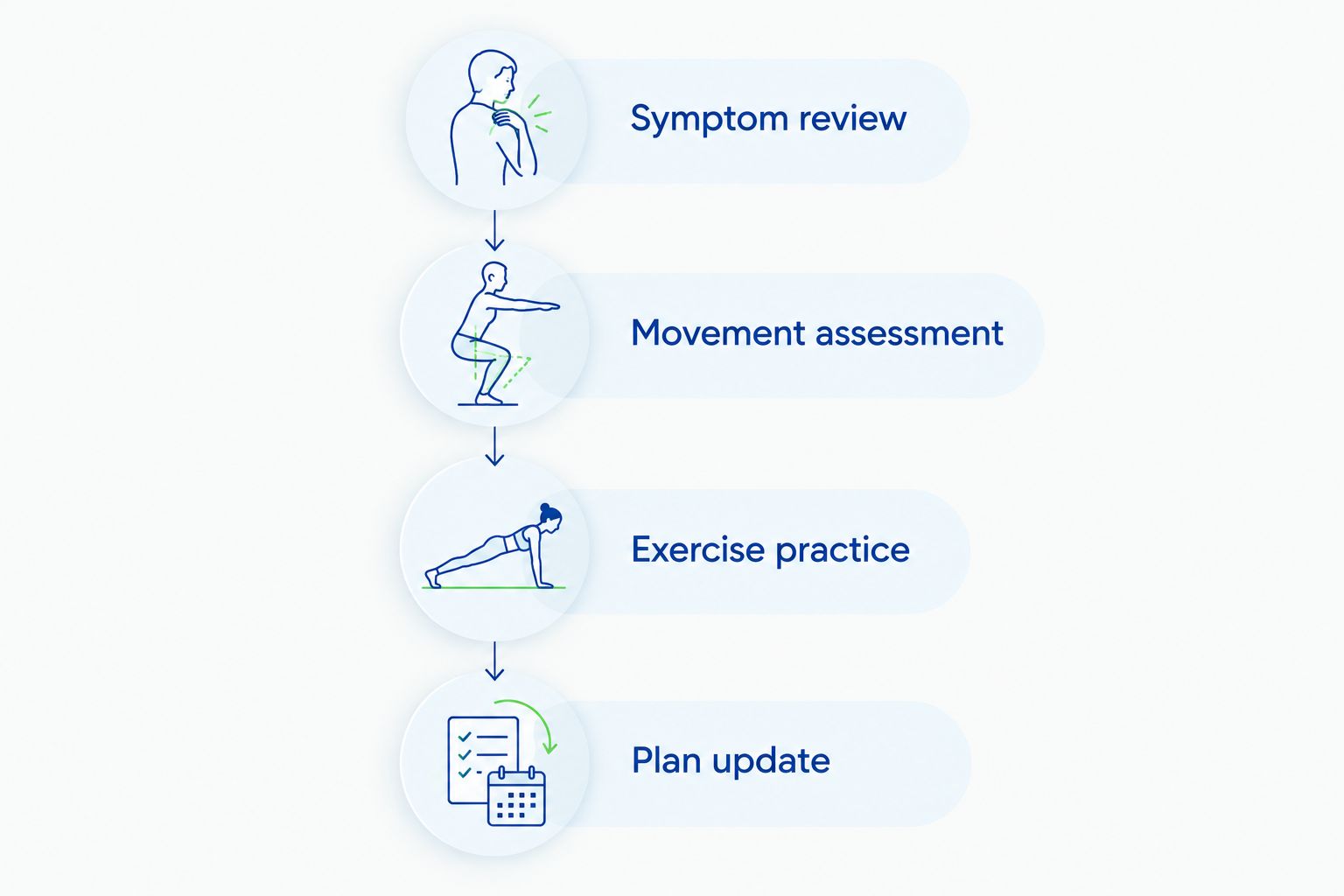
This sequence is a discussion framework, not a promise that every appointment follows an identical format. Your clinician should adjust the visit when symptoms, restrictions, or examination findings change.
Return-to-sport reassessment: match the task to the athlete
Returning to daily activity and returning to competition are different goals. Discuss the demands of your position, training schedule, and competition level rather than assuming that less pain means you are ready for unrestricted participation.
For baseball players and pitchers, relevant goals can include rebuilding tolerance for throwing and coordinating rehabilitation with an appropriate throwing progression. High school and college athletes should also clarify how the rehabilitation plan fits with instructions from their physician, athletic trainer, and coaching staff.
For runners in Manayunk, Roxborough, and nearby northwest Philadelphia, describe the routes and training demands that bring symptoms back. Hills, longer outings, and faster sessions are different challenges; your appointment should address the activity you actually want to resume.
McKenzie Sports Physical Therapy is for Philadelphia athletes and active adults seeking sports injury rehabilitation. The practical goal is a personalized plan tied to your limitations and sport, not an appointment that lasts as long as possible.
Why physical therapy session length varies
Appointment duration depends on the purpose and organization of the visit. These factors explain why another person’s schedule is not a reliable guide to yours:
- Appointment purpose: An initial evaluation requires history-taking and examination; a follow-up builds on an existing assessment.
- Clinical complexity: Multiple symptoms, a changing condition, or postoperative restrictions can require additional discussion and examination.
- Exercise instruction: Learning a movement and checking technique is different from independently repeating a familiar exercise.
- Sport-specific goals: A throwing-related shoulder problem raises different questions from difficulty walking comfortably.
- Treatment selection: The clinician must decide which interventions fit the examination and how to integrate them into the rehabilitation plan.
- Clinic workflow: Ask whether administrative tasks, changing, and home-program review are included in the appointment window.
None of these factors makes a longer session automatically better. For your 2026 schedule, request the actual booking duration and ask what the clinic expects you to accomplish during it.
How do you know whether the appointment is useful?
Judge a session by its purpose, feedback, and next steps—not by the clock alone. You should be able to explain what you worked on and how it relates to an activity that matters to you.
Useful questions include:
- What finding are we trying to change?
- How does this exercise relate to my sport or daily activity?
- What response should make me contact you or change the exercise?
- What will determine the next progression?
- What should I do between appointments?
If previous treatment has not helped, bring the earlier exercise plan and describe what did and did not change. That information supports reassessment without assuming the earlier approach was wrong or that a different technique will guarantee results.
Ask for clarification when a session feels disconnected from your goals. A runner with recurring symptoms needs an explanation of how the plan addresses running demands; a pitcher needs to understand how the plan relates to throwing.
Does adding hands-on treatment mean a longer visit?
Not necessarily. Ask whether an intervention is included within the booked appointment or requires a different appointment arrangement; do not assume that adding a treatment automatically extends your visit.
McKenzie Sports Physical Therapy offers sports massage, dry needling, and shockwave therapy alongside sports injury rehabilitation. Whether an intervention belongs in your plan depends on the clinical assessment, relevant precautions, your preferences, and the goals of treatment—not simply on whether time remains.
For an athlete with leg symptoms, even familiar stretches for sciatica pain relief require context: a movement that suits one person’s presentation is not automatically appropriate for someone with a different cause of pain. Discuss radiating symptoms and your response to movement before adding exercises independently.
The same distinction applies to treatment during an appointment. Ask what a technique is intended to address, what its limitations are, and how the clinician will judge your response. Symptom relief and readiness for sport are not interchangeable.
What should you ask before booking in 2026?
Get the scheduling details before arranging transportation, time away from work, or an early departure from school. A specific question produces a more useful answer than asking how long physical therapy lasts in general.
Use this booking checklist:
- Confirm the visit type. Ask whether you are scheduling an evaluation, follow-up, or reassessment.
- Confirm the full time window. Ask when to arrive and when you should expect to leave.
- Ask about clinician involvement. Clarify how the appointment is organized and who will guide your treatment.
- Check preparation requirements. Ask what records, clothing, referral documents, or insurance information to bring.
- Explain your deadline. Mention school pickup, work, or practice commitments before the appointment begins.
For a high school athlete, a parent can also ask whether they should attend the discussion about restrictions and the home program. College athletes should bring relevant instructions from their sports medicine team when available.
Do not treat the appointment’s end time as permission to return immediately to practice. Ask whether the day’s treatment changes what you should do afterward.
How should you prepare for the appointment?
Bring a concise account of your symptoms and goals. Include the activity that triggers the problem, previous injuries, relevant medical instructions, and the exercises or treatments you have already tried.
Wear clothing that allows the clinician to examine the affected area and lets you move comfortably. Ask the clinic about specific clothing needs rather than assuming you will need to change or perform your usual workout.
Before your 2026 evaluation, write down the question you most need answered. For many athletes, that is not simply when pain will stop; it is how to rebuild activity without repeatedly returning to the same problem.
If your main concern is getting back into care promptly, read about when to see a physical therapist after an injury. Timing an assessment and determining appointment duration are separate decisions.
FAQ
How long does a physical therapy session last for a new patient?
A new-patient physical therapy session lasts for the evaluation window confirmed by the clinic. Ask whether that window includes paperwork, examination, initial treatment, and discussion of your home plan.
Are follow-up physical therapy appointments shorter than the first visit?
Follow-up appointments are not universally shorter than evaluations. Their length depends on the clinic’s scheduling format and the purpose of your visit, so confirm the booked duration.
Does a longer physical therapy session mean better results?
A longer physical therapy session does not automatically mean better results. The relevance of the assessment, exercise selection, feedback, and progression matters more than time alone.
Will dry needling or shockwave therapy make my appointment longer?
Dry needling or shockwave therapy does not automatically extend the booked appointment. Ask whether the proposed treatment fits within your scheduled visit and why it belongs in your rehabilitation plan.
Can I go straight from physical therapy to baseball practice or a run?
Ask your physical therapist before going straight from treatment to practice or a run. The answer depends on your injury, current restrictions, treatment response, and planned activity.
How long will I need physical therapy overall?
Your overall rehabilitation timeline is different from the length of an individual appointment. Your clinician should review progress against your condition, functional goals, and sport demands rather than promise a fixed recovery date.
What if physical therapy has not helped me before?
Tell your clinician what previous treatment involved and what has remained difficult. A reassessment can clarify the current limitations and next steps, but it cannot guarantee a particular outcome.
One last thing
The most valuable question before leaving is: what should I do differently between now and the next visit? If you cannot explain the answer, ask for clearer instructions before heading home.
Your appointment should leave you with a plan, not just a completed time slot. Know which exercises to perform, which activities need adjustment, and what change should prompt you to contact the clinician.
Related guides
- From a telehealth consultation to in-person physical therapy
- From insurance authorization to your first physical therapy appointment
- From a high school sports physical to return-to-play clearance
Returning to running, throwing, or competition in Manayunk, Roxborough, or nearby northwest Philadelphia? Schedule a new-patient appointment with McKenzie Sports Physical Therapy to discuss your injury, your goals, and a rehabilitation plan built around your sport.
Schedule your new-patient appointment
Discuss your injury, activity goals, and appointment details before starting sports rehabilitation.