

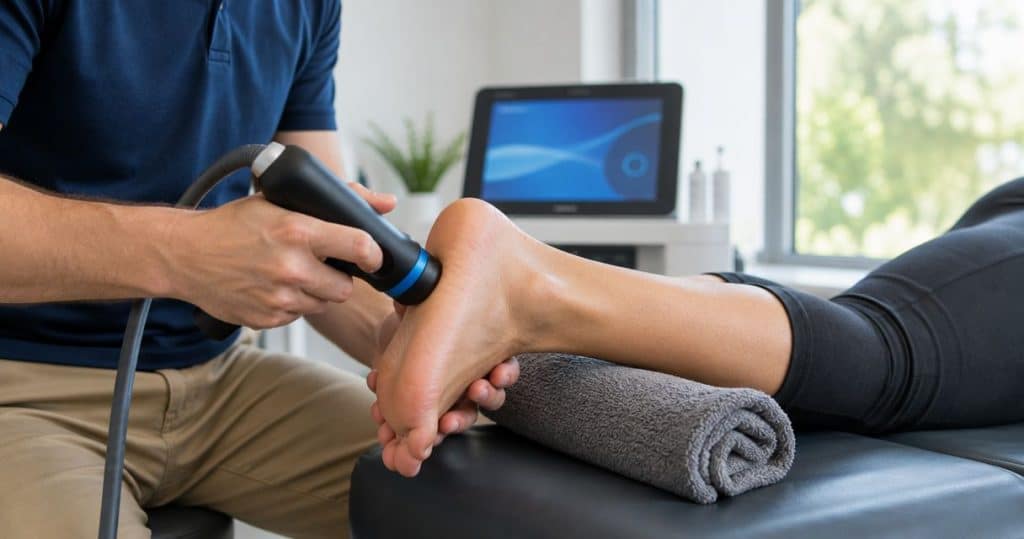
Yes—shockwave therapy can help some runners with persistent plantar fasciitis, particularly when initial treatment has not provided enough relief. For runners considering treatment in 2026, it is an addition to rehabilitation—not a guaranteed fix or permission to resume full mileage.
- Can shockwave therapy help plantar fasciitis runners manage pain? Yes, but results vary and rehabilitation still matters.
- NICE describes inconsistent effectiveness evidence; shockwave treatment should include a clear discussion of benefits, risks, and alternatives.
- McKenzie Sports Physical Therapy offers shockwave therapy and sports rehabilitation for athletes and active adults in Philadelphia.
- Choose treatment around your diagnosis, walking tolerance, strength, and running demands—not a promised recovery date.
Can shockwave therapy help plantar fasciitis in runners?
Shockwave therapy is a treatment option for persistent plantar heel pain, not a replacement for rebuilding running capacity. The strongest reason to consider it is continued pain despite an appropriate initial plan—not simply an upcoming race.
Two credible sources frame the decision differently:
- NICE, “Extracorporeal shockwave therapy for refractory plantar fasciitis”: identifies no major safety concerns but describes inconsistent evidence of effectiveness. Its guidance emphasizes informed consent and appropriate clinical oversight.
- British Journal of Sports Medicine, “Management of plantar heel pain: a best practice guide”: supports education, stretching, and taping as core care, with shockwave therapy considered within stepped care when initial treatment does not produce adequate improvement.
These sources support a discussion, not a guarantee. They address plantar heel pain in broader patient populations; they do not establish a universal return-to-running schedule for every runner.
At McKenzie Sports Physical Therapy, shockwave therapy is among the available services alongside sports injury diagnosis and rehabilitation. Ask how any proposed treatment connects to the activities you need to recover.
Why this matters for Philadelphia runners
Heel pain can interrupt much more than training. Walking to class, standing at work, climbing stairs, and getting around Manayunk or Roxborough all contribute to your daily demands.
A treatment that reduces discomfort during an appointment has not, by itself, answered whether your foot can tolerate running. Your rehabilitation needs to address both symptoms and the demands of your sport.
For your 2026 treatment decision, separate two questions: Is shockwave therapy appropriate for this diagnosis, and what will help you return to running? They belong in the same conversation, but they are not interchangeable.
Where does shockwave therapy fit beside other treatments?
Shockwave therapy delivers acoustic pressure waves through the skin. It is not electrical stimulation, and its proposed biological effects do not establish that a particular runner will improve.
The useful comparison is not which treatment sounds strongest. It is what each option contributes—and what it leaves unfinished.
| Option | Best for | Potential contribution | Limitation |
|---|---|---|---|
| Education and load modification | Runners whose daily and training demands need adjustment | Connects symptoms with running, standing, walking, and recovery | Does not independently rebuild strength |
| Stretching and progressive exercise | Runners rebuilding foot and calf capacity | Addresses mobility, strength, and functional demands | Requires an appropriate dose and reassessment |
| Taping or foot orthoses | Runners who need symptom support during activity | Can provide support within a broader plan | Does not replace exercise or running progression |
| Shockwave therapy | Selected runners with persistent plantar heel pain | Can improve pain and function in some patients | Results vary; treatment can be uncomfortable and does not establish running readiness |
The Heel Pain—Plantar Fasciitis clinical practice guideline in the Journal of Orthopaedic & Sports Physical Therapy supports interventions including plantar fascia and calf stretching, resistance exercise, and selected short-term supports. It advises against treating orthoses as an isolated solution.
Choose a plan that explains each treatment's job. If shockwave therapy is proposed, ask what continues between appointments and how progress will be assessed.
Who should consider shockwave therapy?
Shockwave therapy is most relevant when plantar heel pain persists despite appropriate initial management. Before adding it, a clinician should confirm that the symptoms fit the diagnosis and review what has already been tried.
“Previous treatment did not help” deserves a closer look, not blame. An exercise plan can be difficult to follow, poorly matched to current tolerance, or disconnected from the amount of running and standing you actually do.
Bring the details of your previous care. Which exercises did you perform? What happened when you increased activity? Did anything improve temporarily, and what brought the symptoms back?
McKenzie Sports Physical Therapy is best suited to athletes and active adults seeking sports injury rehabilitation in Philadelphia. Shockwave therapy is one available option, but an evaluation—not the treatment name—should determine the next step.
When should you get assessed before pursuing shockwave therapy?
Not every painful heel has plantar fasciitis. Bone stress injuries, nerve-related symptoms, and other conditions can overlap with plantar heel pain, so a familiar location does not establish the diagnosis.
Seek prompt medical assessment for an inability to bear weight after an injury, marked swelling, redness with fever, or new numbness or weakness. Describe pain at rest, night pain, and any sudden change in symptoms rather than assuming they are part of your usual running injury.
Tell the treating clinician about blood-thinning medication, bleeding disorders, pregnancy, altered sensation, and relevant medical conditions. Shockwave suitability depends on the treatment area, equipment, and your clinical circumstances.
For high school athletes, parents should be part of the history and treatment discussion. A younger athlete's heel pain should not automatically receive the same diagnosis or plan as an adult runner's.
Why results from shockwave therapy vary
Different outcomes do not mean that a runner failed treatment. They mean the diagnosis, treatment choice, and activity plan need reassessment.
The evidence and clinical guidance support considering these factors:
- Diagnosis: Treatment directed at the plantar fascia will not address every possible cause of heel pain.
- Previous care: Persistent symptoms after an appropriate rehabilitation plan present a different decision from symptoms that have never been assessed.
- Treatment protocol: Shockwave devices and treatment settings differ, so results from one study do not automatically describe every clinic's approach.
- Activity demands: Running is only part of the load; work, school, walking, and other sports also matter.
- Rehabilitation plan: Symptom relief does not replace the strength and activity progression needed for sport.
- Outcome measured: Less pain, easier walking, and a return to previous mileage are different outcomes.
Ask the clinician which outcome the proposed treatment is intended to improve. A clear answer makes it easier to decide whether continuing, changing, or stopping a treatment makes sense.
What should a return-to-running plan include in 2026?
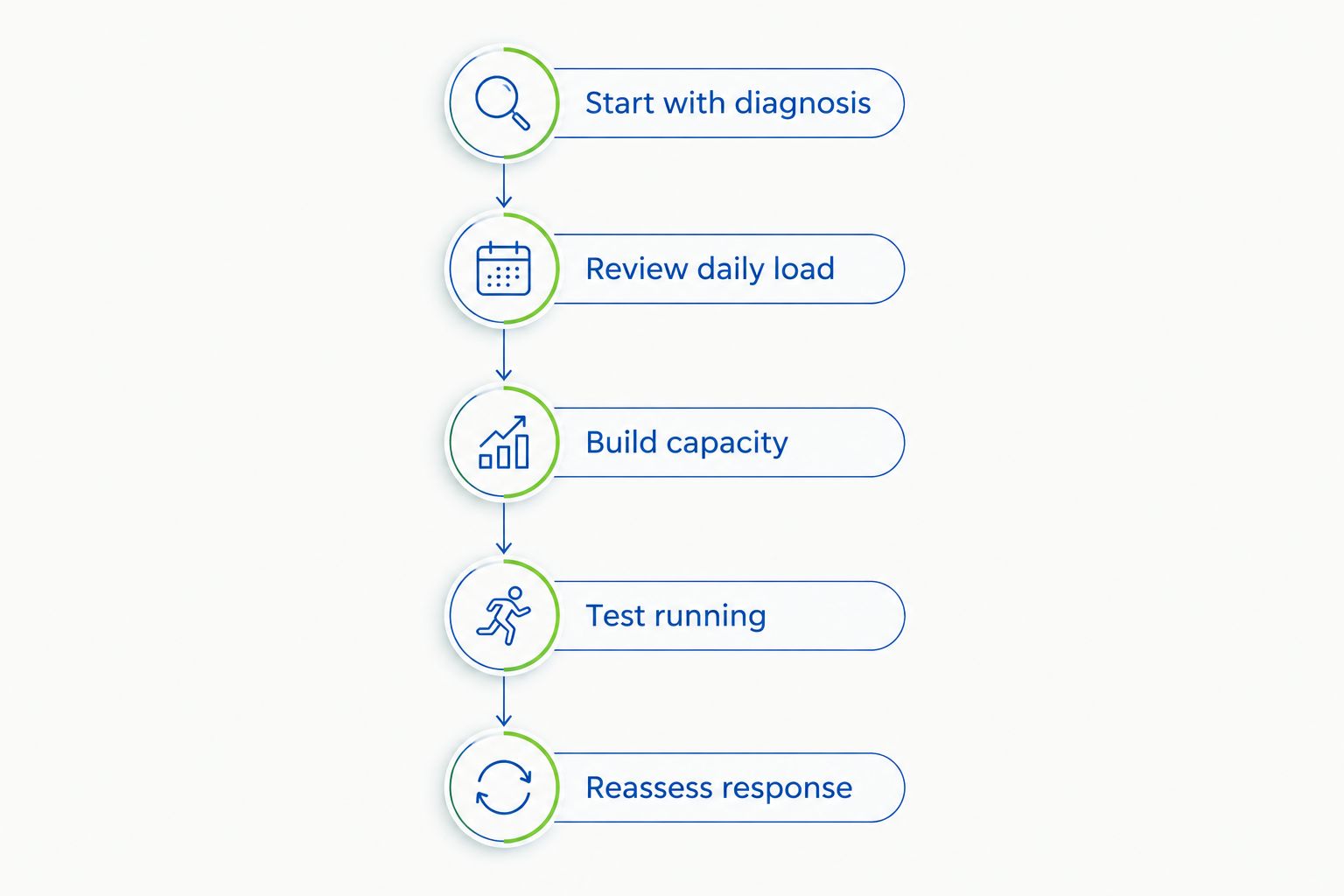
A useful rehabilitation plan links the evaluation to your actual training goal. It should explain what you can do now, what you are rebuilding, and what will guide the next change.
Start with diagnosis
Describe where the pain occurs, when it started, and how it behaves during the day. Include first-step discomfort, symptoms during running, and any recent change in training or daily activity.
Mention other sport demands too. A baseball player who also runs for conditioning has different requirements from a distance runner preparing for a race; pitchers also need their lower-body demands considered within the whole sport.
Review daily load
Count more than mileage. Standing shifts, campus walking, gym sessions, and weekend activity can explain why a seemingly lighter running week still feels demanding.
Your clinician can help identify which activities need adjustment. Complete rest and unchanged training are not the only choices.
Build capacity
Exercise should match the examination and your current tolerance. The plan should explain the purpose of prescribed strengthening or stretching and how to respond if symptoms increase.
Do not copy another runner's exercise dose simply because the diagnosis sounds similar. Progression should follow your response and functional needs.
Test running
Running progression needs a starting point and a reassessment plan. Discuss the response during activity, later that day, and the following morning rather than judging success only by how the first run feels.
Reassess response
If progress stalls, revisit the diagnosis, exercise dose, and total activity before repeating the same approach indefinitely. Additional treatment should answer a specific problem.
How can you track whether treatment is helping?
For a practical 2026 appointment record, keep a 7-day symptom log before your evaluation. This is a preparation tool, not a requirement to delay care.
Use a 0–10 pain scale consistently, noting what the number represents for you. Record first steps, walking tolerance, running activity, and any exercises performed.
Include the response over the following 24 hours, especially how the next morning compares with your usual baseline. This observation window is not a universal clearance rule; your clinician should explain which changes matter for your situation.
Track function alongside pain. Being able to complete ordinary walking more comfortably is useful progress, but it does not automatically establish readiness for hills, speedwork, or competition.
Does shockwave therapy hurt?
Shockwave therapy can be uncomfortable during treatment, and temporary soreness or skin changes can occur afterward. Tell the clinician what you feel so treatment tolerance can be assessed.
Pain during a session is not proof that treatment is working. Ask what sensations are expected, what should prompt stopping, and how to handle an unexpected reaction afterward.
The guide to whether shockwave therapy hurts addresses this concern separately. Your own experience still needs an individual discussion.
Can you keep running during shockwave therapy?
Running during treatment requires an individualized activity plan. The diagnosis, symptom response, and treatment instructions matter more than whether a session has been completed.
Ask for a clear explanation of permitted activity, warning signs, and progression criteria. Avoid treating temporary pain relief as permission to restore your previous mileage immediately.
If you need another way to train, choose it around the same symptom and recovery considerations. An activity is not automatically suitable simply because it is described as low impact.
What if previous treatment has not helped?
Persistent symptoms justify reassessment rather than a promise that one additional treatment will solve everything. Review the original diagnosis, how the plan was carried out, and whether daily activity matched the recommendations.
At McKenzie Sports Physical Therapy, available services include sports rehabilitation and shockwave therapy. Ask which findings support each proposed treatment and how the plan will change if progress is insufficient.
For runners in northwest Philadelphia, the practical goal is a plan you understand and can follow around school, work, and training. You should leave knowing what to do next—not just which treatment was performed.
FAQ
Can shockwave therapy help plantar fasciitis in runners?
Yes, shockwave therapy can help some runners with persistent plantar fasciitis, but improvement is not guaranteed. It should sit within a plan that addresses diagnosis, activity demands, and rehabilitation.
Is shockwave therapy better than physical therapy exercises?
Shockwave therapy is not a substitute for physical therapy exercises. Exercise addresses strength and functional capacity, while shockwave therapy is an additional option for selected patients with persistent symptoms.
How many shockwave sessions will I need for heel pain?
The number of shockwave sessions depends on the treatment protocol and your response. Ask when progress will be reviewed and what would lead the clinician to change the plan.
Can I run the day after shockwave therapy?
Whether you can run the day after shockwave therapy depends on your diagnosis, response, and clinician’s instructions. Completing a treatment session does not establish that your foot is ready for running.
Does shockwave therapy permanently cure plantar fasciitis?
Shockwave therapy does not guarantee a permanent cure for plantar fasciitis. Symptom improvement and return to running require separate assessment, and recurring pain deserves reassessment.
Should my high school runner get shockwave therapy for heel pain?
A high school runner should have heel pain assessed before shockwave therapy is considered. The diagnosis and treatment suitability need an age-appropriate evaluation rather than assumptions based on adult plantar fasciitis.
What should I ask at a shockwave therapy consultation?
Ask why shockwave therapy fits your diagnosis, what its limitations are, and how it connects to rehabilitation. Also ask about expected discomfort, alternatives, activity instructions, and reassessment.
One last thing
Pain relief and running readiness are different milestones. Before your next 2026 training block, ask what functional progress—not just a lower pain score—will guide your return.
Related guides
- Is shockwave therapy worth it?
- How many shockwave therapy sessions do you need?
- Cross-training exercises for injured runners
If recurring heel pain is interrupting your running in Manayunk, Roxborough, or nearby northwest Philadelphia, request a new-patient appointment with McKenzie Sports Physical Therapy to discuss your symptoms, previous treatment, and return-to-sport goals.