Shockwave therapy works on a weeks-to-months timeline, not an instant-recovery timeline, and no single deadline applies to every injury. Early pain relief does not establish that a tendon or heel is ready for running, pitching, or competition; improvement needs to hold up as your activity increases.
- How long does shockwave therapy take to work? Assess progress over weeks to months, not immediately after treatment.
- McKenzie Sports Physical Therapy offers shockwave therapy and sports injury rehabilitation for Philadelphia athletes and active adults.
- Pain relief, exercise tolerance, and return-to-sport readiness are different outcomes; track each separately.
- Persistent or worsening symptoms need reassessment, not an automatic increase in shockwave treatments.
Why this matters
If you are a runner in Manayunk or Roxborough whose heel keeps hurting, the useful question is not just when treatment starts working. It is whether treatment helps you tolerate the activity that keeps bringing the pain back.
The same distinction matters for high school and college athletes facing a season deadline. A quieter symptom is encouraging, but it is not return-to-play clearance. Your 2026 training calendar should follow your rehabilitation progress, not dictate it.
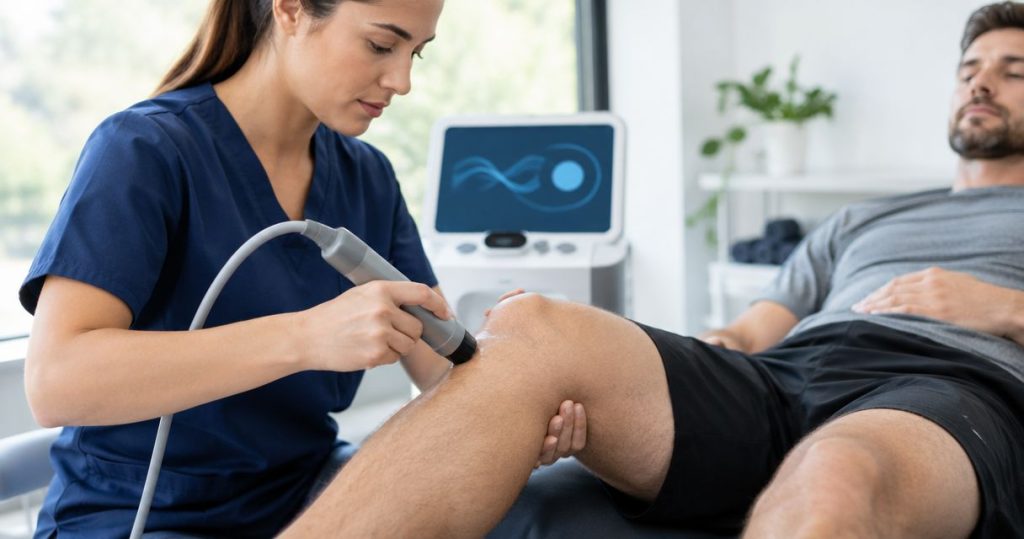
McKenzie Sports Physical Therapy provides sports injury rehabilitation services, including shockwave therapy. The practical starting point is an injury assessment and a discussion of whether shockwave belongs in your treatment plan.
How long does shockwave therapy take to work?
Expect to judge shockwave therapy over weeks to months, using both symptoms and function. There is no dependable average that predicts when an individual athlete will feel better or return to sport.
Published research also separates treatment appointments from follow-up assessments. Gerdesmeyer and colleagues’ 2008 randomized trial in The American Journal of Sports Medicine, involving chronic plantar fasciitis, assessed outcomes at 12 weeks and 12 months. Those checkpoints describe the study—not a promise that your symptoms will resolve by either date.
Use the following distinctions when you ask whether treatment is working:
| Checkpoint | What to look for | What it cannot establish |
|---|---|---|
| Early symptom response | A change in your familiar pain during ordinary activity | Whether the improvement will last |
| Rehabilitation progress | Better tolerance of prescribed exercises and daily demands | Readiness for unrestricted training |
| Sport-specific progress | Better tolerance of running, jumping, or throwing progression | Automatic clearance for competition |
These are different questions. A runner who walks comfortably but still develops heel pain during a run has made progress in walking—not necessarily in running capacity.
For your 2026 treatment plan, ask your clinician to define the outcome being measured. A clear target is more useful than a vague instruction to wait and see.
What does the evidence actually establish?
Shockwave therapy is not equally supported for every diagnosis. Results from chronic plantar heel pain research cannot automatically be applied to shoulder pain, an acute muscle strain, or an undiagnosed pitching injury.
NICE’s 2009 guidance on shockwave therapy for refractory plantar fasciitis and its 2016 guidance for Achilles tendinopathy describe inconsistent evidence of effectiveness. These condition-specific assessments support an important limitation: shockwave therapy does not reliably help everyone, and treatment response remains uncertain.
The dates matter because a study or guidance document has a defined scope. Ask how the evidence applies to your actual diagnosis rather than assuming that every sports injury responds the same way.
Why the time to improvement varies
Your timeline depends on more than the treatment appointment. These factors help explain why another athlete’s experience is not a reliable countdown for yours:
- The diagnosis. Plantar heel pain, Achilles tendinopathy, and throwing-related elbow pain are not interchangeable problems. Treatment selection starts with identifying the likely source of symptoms.
- Your starting function. Pain during ordinary walking presents a different rehabilitation task from pain that appears only during demanding training.
- Your activity load. Running mileage, sprinting, jumping, lifting, and pitching place different demands on injured tissue. Your plan needs to account for those demands.
- The rehabilitation alongside treatment. Shockwave does not provide a progressive strength or sport-specific exercise program by itself.
- The response between appointments. A short-lived change immediately after treatment carries a different meaning from sustained improvement during normal activity.
- The goal you are measuring. Better sleep, easier walking, comfortable exercise, and competitive sport are separate milestones.
Tell your clinician about team practices, games, strength sessions, and workouts outside formal rehabilitation. An exercise plan cannot reflect your actual workload if part of that workload stays out of the conversation.
How should you track whether shockwave is helping?
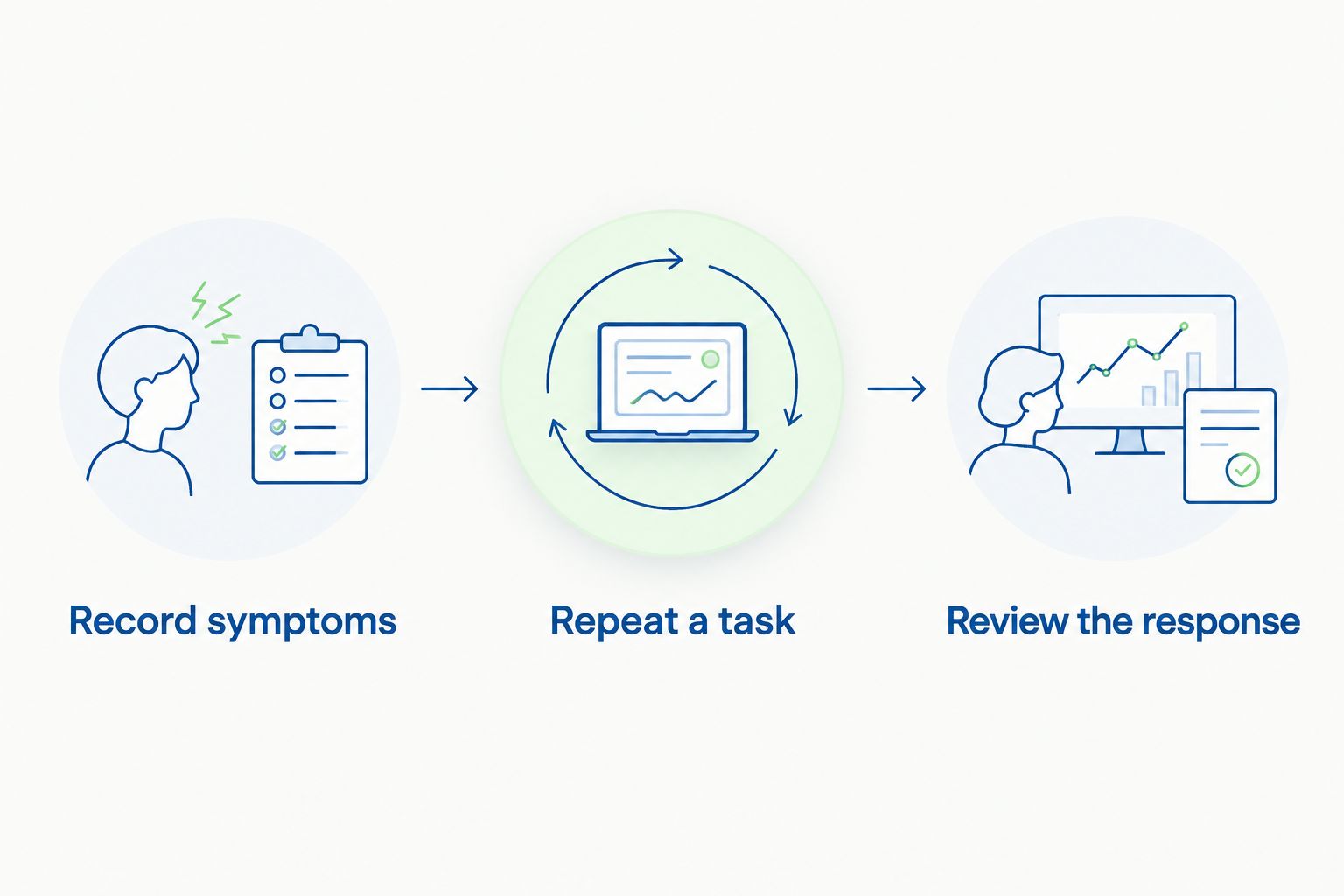
Use 3 checkpoints: your familiar symptoms, a repeatable activity, and your response afterward. This creates a practical record without turning every sensation into a verdict on treatment.
- Record symptoms. Describe where the pain occurs, what brings it on, and whether it affects ordinary activity. Distinguish your usual injury symptoms from soreness associated with treatment.
- Repeat a task. Choose a clinician-approved activity that reflects your limitation. For a runner, that might be a walking or running task; for another athlete, it might be a prescribed strength exercise.
- Review the response. Note how the activity felt and what happened afterward. Bring that information to your next appointment before changing the training load.
A useful update sounds like this: walking is easier, but the usual running task still brings back the familiar pain. That describes a pattern your clinician can investigate without assuming the treatment has either succeeded or failed.
Avoid testing the injury with an unplanned hard workout just to find out whether shockwave worked. Your progress check should be part of rehabilitation, not a surprise competition.
What does progress mean for your sport?
Runners: improvement must extend beyond easier walking
For recurring heel or Achilles symptoms, track the transition from ordinary activity to running demands. Comfortable walking matters, but it does not establish tolerance for hills, speed work, or your previous training volume.
Ask how your running progression fits with strength work and symptom monitoring. If you repeatedly feel better at rest and worse after returning to the same workload, bring that pattern to the appointment rather than simply repeating the cycle.
Baseball players and pitchers: establish the diagnosis first
Do not assume a painful throwing shoulder or elbow needs shockwave because another athlete used it for heel pain. The evaluation needs to address the injury, your throwing demands, and whether additional medical assessment is necessary.
For a pitcher, reduced pain during daily activity is not the same as tolerating a throwing progression. Your rehabilitation plan should explain how strength, movement, and throwing exposure will be assessed before competition.
High school and college athletes: separate the schedule from clearance
Tell your clinician about tryouts, tournaments, practices, and coach expectations. Parents should also understand the difference between feeling better and meeting return-to-sport criteria.
A 2026 season deadline is useful planning information, not evidence that an injury is ready. Ask who will make the clearance decision and how the rehabilitation plan connects with any school or team requirements.
What if previous treatment has not helped?
Frustration is understandable when symptoms return after rest, exercise, or earlier treatment. That history deserves a fresh review, not a promise that another procedure will solve the problem.
Bring the details that help distinguish an incomplete response from a recurring workload problem:
- Which activities improved and which remained painful.
- What exercises you performed and how they progressed.
- Whether you returned to training before symptoms returned.
- Any previous diagnosis, imaging, or treatment restrictions.
- What you most need to get back to doing.
Shockwave can be discussed as part of that reassessment, but it should not replace the explanation of what is being treated. Ask what the clinician expects it to contribute, what its limitations are, and how the plan changes if function does not improve.
McKenzie Sports Physical Therapy is a sports rehabilitation option for Philadelphia athletes and active adults seeking injury assessment and treatment. Its services include shockwave therapy, but choosing a service should follow the clinical assessment rather than come before it.
Can I keep training while shockwave therapy starts working?
Training decisions depend on the diagnosis, symptoms, and your clinician’s instructions—not simply on whether you have started shockwave therapy. Do not assume that receiving treatment makes your usual workload safe.
Ask which activities to continue, modify, or pause. For a runner with recurring pain, the answer should address running itself; for a baseball player, it should address throwing rather than stop at general exercise advice.
Does feeling better after treatment mean the injury has healed?
Feeling better after treatment does not establish that an injury has healed or that unrestricted sport is appropriate. Pain response and physical capacity need separate assessment.
Keep following the agreed exercise and activity progression even when symptoms settle. If your usual pain returns as demands rise, report that pattern before adding more training.
When should I ask for a reassessment?
Ask for reassessment when symptoms worsen, function declines, or the agreed progress checkpoints are not improving. Repeating treatment without reviewing the diagnosis and activity plan leaves the main question unanswered.
Seek prompt medical assessment for a sudden pop with loss of function, inability to bear weight, or new marked weakness. Do not wait for a shockwave follow-up to address a new injury or substantial change.
FAQ
How long does shockwave therapy take to work for plantar fasciitis?
Shockwave therapy for plantar fasciitis is evaluated over weeks to months, but there is no guaranteed individual response time. A published randomized trial assessed outcomes at 12 weeks and 12 months; those are research checkpoints, not recovery deadlines.
Should I feel better immediately after shockwave therapy?
Immediate improvement is not required to judge shockwave therapy, and immediate relief does not establish lasting recovery. Track your familiar symptoms and activity tolerance between appointments.
How many shockwave sessions do I need before deciding whether it works?
There is no universal session count that determines whether shockwave therapy works for every injury. Agree on the planned treatment course and reassessment criteria with your clinician before starting.
Can I run while having shockwave therapy?
Running during shockwave treatment requires advice specific to your injury and current function. Ask how to adjust running alongside rehabilitation rather than treating symptom relief as permission for unrestricted mileage.
Is soreness after shockwave therapy normal?
Temporary discomfort can occur after shockwave therapy. Ask your treating clinician what response to expect, and report substantial worsening or symptoms that differ from your usual injury.
Does shockwave therapy replace strength exercises?
Shockwave therapy does not replace a prescribed strengthening or return-to-sport program. Treatment and exercise address different parts of rehabilitation, and the plan should explain the role of each.
What should I do if shockwave therapy is not helping?
Ask for reassessment if your agreed measures of pain and function are not improving. Review the diagnosis, treatment response, and training demands rather than automatically adding appointments.
One last thing
Before starting treatment in 2026, write down the activity you want back—not just the symptom you want gone. “Return to running without the familiar heel pain” gives your rehabilitation discussion a clearer direction than “make it feel better.”
Ask your clinician what evidence will show that you are moving toward that goal. That question keeps the focus on useful recovery rather than the number of treatments completed.
Related guides
- How many shockwave therapy sessions do you need?
- Does shockwave therapy hurt?
- Can shockwave therapy help plantar fasciitis in runners?
For a 2026 return-to-sport plan built around your injury and activity goals, request a new-patient appointment with McKenzie Sports Physical Therapy. Athletes and active adults in Manayunk, Roxborough, and nearby northwest Philadelphia can discuss whether shockwave therapy belongs in their rehabilitation plan.