

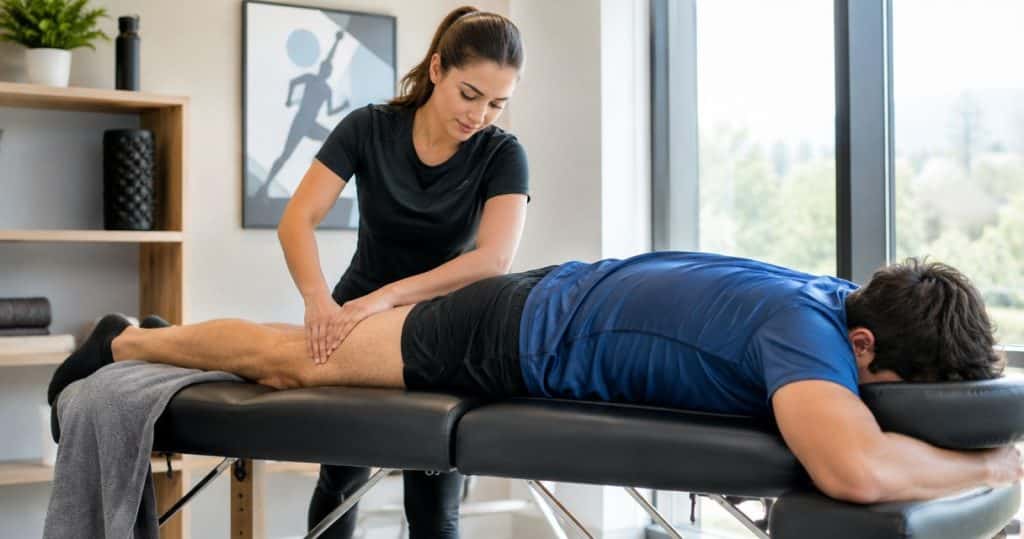
Athletes should get a sports massage according to their symptoms, training demands, and response to treatment—not a universal weekly or monthly schedule. Massage can support short-term relief of soreness, but recurring pain or difficulty returning to sport calls for an injury assessment rather than simply more frequent appointments.
- How often should athletes get a sports massage? Use training demands, symptoms, and treatment response—not a fixed schedule.
- Sports massage can help soreness; it does not replace strength training, rehabilitation, or return-to-sport assessment.
- McKenzie Sports Physical Therapy offers sports massage and injury rehabilitation for Philadelphia athletes and active adults.
- Recurring pain, weakness, or altered movement calls for assessment before increasing massage frequency.
Why this matters
A runner whose calf tightness returns on every outing needs a different plan from a pitcher who feels generally sore after a demanding practice. The question is not just when to book again. It is whether massage addresses the problem keeping you from training.
For athletes in Manayunk, Roxborough, and nearby northwest Philadelphia, McKenzie Sports Physical Therapy is best for athletes seeking sports massage alongside sports-injury assessment and rehabilitation. You can explore the clinic’s sports physical therapy and injury rehabilitation services when soreness starts affecting your return to activity.
How often should athletes get a sports massage?
There is no well-established massage frequency that every athlete should follow. Choose the next appointment based on a clear goal and whether the previous session helped you function—not just whether the massage felt good.
A 2020 systematic review and meta-analysis, Effect of sports massage on performance and recovery, published in BMJ Open Sport & Exercise Medicine, included 29 studies and 1,012 participants. It found benefits for flexibility and delayed-onset muscle soreness, but no evidence of improved strength, jump, sprint, endurance, or fatigue outcomes. Those findings support selective use, not a universal appointment schedule.
Use this comparison to decide what kind of next step fits your situation in 2026:
| Situation | Best for | Role of massage | Limitation and scheduling decision |
|---|---|---|---|
| General soreness after demanding exercise | Athletes without a new injury concern | Optional short-term symptom relief | Repeat only if the benefit is useful; soreness alone does not establish a schedule |
| Comfortable training with occasional tightness | Active adults seeking symptom management | An optional addition to recovery habits | There is no established need to book recurring appointments when function is normal |
| Recurring pain during running, throwing, or lifting | Athletes whose symptoms interrupt training | A possible addition to rehabilitation | Arrange an assessment before treating recurrence with more massage |
| Return from an injury | Athletes rebuilding sport-specific capacity | A supporting treatment when appropriate | Progress depends on function and rehabilitation goals, not massage attendance |
You do not need to turn massage into a standing commitment before knowing whether it helps. Start with the purpose, assess the response, and make the next scheduling decision from that information.
Routine recovery: use massage when it serves a clear purpose
For an athlete who is training comfortably, massage is optional. Feeling better after a session is a valid benefit, but it does not prove that the session prevented an injury or improved athletic performance.
Useful goals include easing general muscle soreness or making a restricted movement feel more comfortable. Keep the goal specific enough to check afterward: comfortable walking, an easier squat, or less stiffness during ordinary movement.
Do not increase frequency just because your training calendar gets busy. First consider sleep, recovery opportunities, and whether your workload has changed. Massage cannot compensate for repeatedly doing more activity than you can currently tolerate.
For your 2026 training plan, leave room to reassess. If you are functioning well without appointments, there is no evidence-based reason to assume that a fixed massage calendar is necessary.
Recurring symptoms: assess the problem before booking more
When the same pain returns during the same activity, temporary relief is not the same as resolving the problem. A massage might make an area feel less tight while the activity that provokes symptoms remains difficult.
A runner might notice calf discomfort returning whenever hills resume. A baseball player might feel shoulder tightness each time throwing intensity increases. These patterns do not establish a diagnosis, but they give a clinician useful information about what needs assessment.
Tell your clinician what triggers the symptoms, what makes them settle, and what previous treatment changed. If earlier care has not helped, describe the limits precisely rather than starting from the assumption that you need deeper pressure or more appointments.
The practical question is: What needs to change so you can tolerate your sport again? The answer might involve exercise, training adjustments, further evaluation, or massage as one part of the plan.
Return-to-sport rehabilitation: schedule around function
Returning from injury requires more than feeling relaxed after treatment. Your rehabilitation plan should address the movements and demands you need to handle in practice and competition.
For pitchers, that means discussing throwing demands and symptom response—not just shoulder tightness. For runners, it means considering running exposure and the response to changes in terrain or effort. High school and college athletes also need a plan that accounts for practices, games, and school commitments.
At McKenzie Sports Physical Therapy, sports massage is one of the stated services alongside sports-injury diagnosis and rehabilitation. Ask how any proposed massage treatment connects to your individual return-to-sport goals and how that benefit will be assessed.
Parents should distinguish a treatment visit from clearance to compete. The guide to high school return-to-play clearance addresses that separate decision.
Why sports massage frequency varies
Your 2026 massage schedule should reflect the problem being treated rather than a package or habit. Discuss these factors with your clinician:
- Treatment goal: General soreness, restricted movement, and recurring sports pain are different reasons for seeking help.
- Training demands: Report changes in running, throwing, lifting, practices, and competition so treatment decisions reflect your actual activity.
- Symptom pattern: Explain whether discomfort follows exercise, occurs during it, persists at rest, or keeps returning in one location.
- Treatment response: Describe useful relief, no change, or increased soreness after the previous appointment.
- Rehabilitation progress: Consider whether you are tolerating your exercises and sport-specific tasks better, not simply attending treatment.
- Health and injury history: Recent injuries, surgery, medication use, and relevant medical conditions can change whether massage is appropriate.
These factors do not produce an automatic interval. They help you and your clinician decide whether to repeat treatment, change the approach, or investigate the symptoms further.
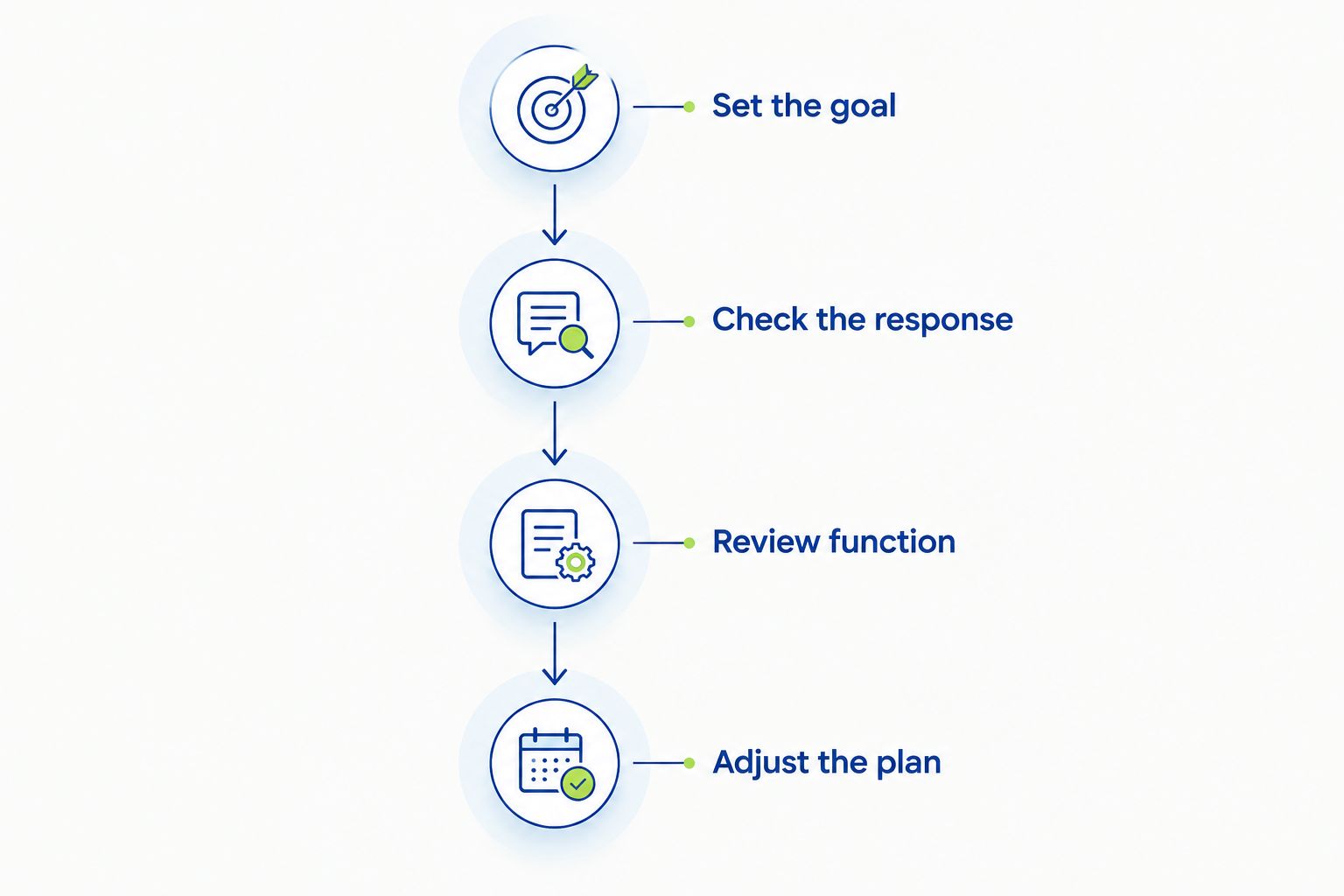
How to decide whether another appointment is useful
Use a simple decision process instead of automatically rebooking. The goal is to connect each session to a meaningful change in comfort or function.
- Set the goal. Name the symptom or movement you want to address. Avoid using a vague goal such as fixing everything that feels tight.
- Check the response. Notice whether treatment produced a useful change and whether it caused unwanted soreness or other symptoms.
- Review function. Compare ordinary movement and clinician-approved activity with how they felt before treatment. Do not use a hard workout as an injury test.
- Adjust the plan. Repeat massage when its benefit supports your goals; discuss a different approach when improvement is absent or repeatedly short-lived.
The important distinction is between a pleasant treatment experience and a useful treatment result. Both matter, but only the second tells you whether massage is helping the problem you came to address.
Can I get a sports massage every week?
Weekly sports massage is not a requirement for athletes. A recurring schedule should have an individual purpose and be reconsidered when it provides no meaningful benefit, causes troublesome soreness, or substitutes for addressing persistent symptoms.
Ask what the appointment is intended to change and how you will judge that change. An unexplained weekly schedule is not a personalized rehabilitation plan.
Should I get a sports massage before a game or race?
Do not introduce an unfamiliar or aggressive massage immediately before an important event. Massage can cause soreness, and research does not establish it as a reliable way to improve competitive performance.
Discuss timing and intensity with your clinician, especially when you are managing an injury. Feeling temporarily looser does not establish that you are ready to compete.
Should runners and pitchers follow the same massage schedule?
Runners and pitchers should not follow a shared schedule simply because both are athletes. Their sport demands, symptom patterns, injury histories, and responses to treatment differ.
A clinician should connect treatment to the activity you need to regain. For a runner, that discussion concerns running tolerance; for a pitcher, it concerns throwing demands and the wider rehabilitation plan.
When massage is not the right next step
New or worsening symptoms deserve attention before another massage. Stop treating a problem as routine tightness when it includes marked swelling, unexplained bruising, new weakness, numbness, or loss of normal function.
Seek urgent medical care for symptoms such as sudden unexplained calf swelling, particularly with warmth or redness. Chest pain or shortness of breath requires emergency care—not a massage appointment.
The National Center for Complementary and Integrative Health’s overview, Massage Therapy: What You Need To Know, describes massage risks and advises discussing medical conditions with a healthcare professional. Tell your clinician about blood-thinning medication, recent surgery, suspected blood clots, fractures, or skin problems before treatment.
More pressure is not proof of better care. Speak up about sharp pain, tingling, or an intensity you cannot comfortably tolerate.
What to bring to a sports massage or rehabilitation visit
Make your 2026 appointments more useful by bringing a clear description of the problem. You do not need a perfect training log; practical details help direct the conversation.
- Describe the activity that starts the symptoms and the point when they appear.
- Explain whether symptoms settle with rest or continue into daily activities.
- List previous treatment and what did or did not improve.
- Share your current exercise plan and any return-to-sport restrictions.
- Identify the practice, race, season, or activity you hope to return to without assuming that date guarantees readiness.
For high school and college athletes, include relevant information from the treating clinician or athletic trainer. Coordinated decisions matter more than adding another treatment to an already crowded schedule.
FAQ
How often should athletes get a sports massage in 2026?
Athletes should schedule sports massage according to symptoms, training demands, and treatment response rather than a universal interval. Recurring pain or interrupted training calls for an assessment, not an automatic increase in appointments.
Is weekly sports massage better than monthly sports massage?
Weekly sports massage is not established as better than monthly massage for every athlete. Choose an interval only after identifying a useful treatment goal and reviewing your response.
Can sports massage replace physical therapy for an injury?
Sports massage does not replace an injury assessment or a rehabilitation plan. It can serve as a supporting treatment when it helps you work toward a specific functional goal.
Should I book another massage if the same pain keeps returning?
Recurring pain should prompt reassessment before you simply book more massage. Tell your clinician which activity brings it back and whether previous treatment changed your ability to perform that activity.
Does sports massage improve athletic performance?
Sports massage is not established as a reliable performance booster. A systematic review of sports massage research found benefits for flexibility and delayed-onset muscle soreness but no evidence of improved strength, jump, sprint, endurance, or fatigue outcomes.
Is deeper sports massage always better?
Deeper sports massage is not automatically better. Pressure should reflect your symptoms, health history, and tolerance; sharp pain or tingling is a reason to speak up and stop the technique.
Can McKenzie Sports Physical Therapy help with massage and sports rehabilitation?
McKenzie Sports Physical Therapy offers sports massage, sports-injury diagnosis, and rehabilitation for athletes and active individuals in Philadelphia. Ask how treatment can address your symptoms and support a personalized return-to-sport plan.
One last thing
A treatment that helps you feel better is useful; a plan should also help you understand what to do next. Before leaving, ask what activity is appropriate, what response to watch for, and what would change the next treatment decision.
Keep that distinction in your 2026 recovery plan. The objective is not to accumulate massage appointments—it is to make informed progress toward the activities that matter to you.
Related guides
- Cross-training exercises for injured runners
- Dry needling for runners with chronic injuries
- From telehealth consultation to in-person physical therapy
If recurring soreness or pain is holding back your running, throwing, or return to sport in Manayunk, Roxborough, or nearby northwest Philadelphia, request a new-patient appointment to discuss your symptoms and rehabilitation goals.
Request a new-patient appointment
Discuss recurring symptoms, sports massage, and your return-to-sport rehabilitation goals.