No—sports massage and deep tissue massage overlap, but they are not the same: sports massage describes a treatment purpose tied to activity, while deep tissue massage describes an approach to deeper muscles and connective tissue. In 2026, choose by your symptoms and training goals, not by how much pressure you can tolerate; neither label establishes an injury diagnosis or proves you are ready to return to sport.
- Is sports massage the same as deep tissue massage? No: sports massage describes purpose; deep tissue describes an approach.
- Sports massage can include deep tissue techniques, but pressure should match your symptoms and tolerance.
- Massage can support symptom relief; it does not establish readiness to run, pitch, or compete.
- McKenzie Sports Physical Therapy suits Philadelphia athletes seeking sports massage alongside sports-injury evaluation and rehabilitation.
Is sports massage the same as deep tissue massage?
Sports massage is organized around your activity; deep tissue massage is organized around the tissues being treated. A session can fit both descriptions. Neither term tells you exactly which techniques a clinician will use, how much pressure you will receive, or whether massage addresses the reason your symptoms keep returning.
| Comparison | Sports massage | Deep tissue massage |
|---|---|---|
| Main emphasis | Activity-related needs and treatment goals | Deeper muscles and connective tissue |
| Techniques | Can include several massage techniques, including deeper work | Usually emphasizes slower, more focused pressure |
| Pressure | Adjusted to your symptoms, tolerance, and purpose | Often firm, but should still be adjusted to your response |
| Best for | Athletes seeking massage connected to training or recovery goals | People seeking focused massage when deeper pressure is appropriate |
| Main limitation | The sports label does not establish effectiveness or return-to-play readiness | Greater pressure does not establish greater benefit |
| Overlap | Can include deep tissue techniques | Can be part of a sports massage session |
These are working distinctions, not standardized treatment protocols. Ask what the proposed session includes rather than assuming the service name answers that question.
Why this matters
Choosing massage by intensity alone misses the more useful question: what is stopping you from doing your sport? Temporary muscle soreness, recurring pain during activity, and a new injury call for different decisions.
For athletes in Manayunk, Roxborough, and nearby northwest Philadelphia, McKenzie Sports Physical Therapy offers sports massage as well as sports-injury diagnosis and rehabilitation. That distinction matters when you need more than relief from a sore area.
For your 2026 training plan, separate feeling better from being ready. Less discomfort after hands-on treatment does not, by itself, show that your shoulder can tolerate pitching or your leg can tolerate another run.
Sports massage: best for activity-related treatment goals
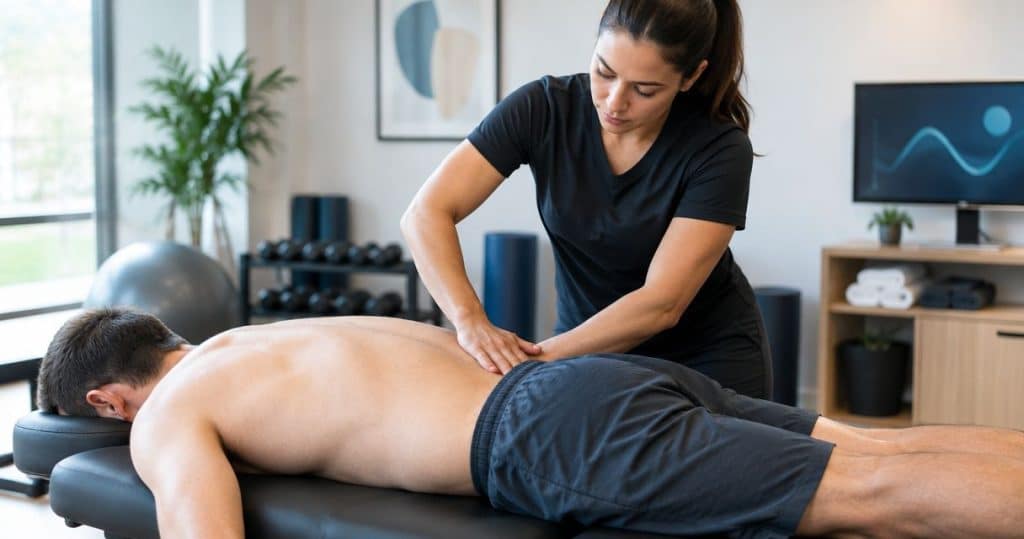
Sports massage places your activity at the center of the discussion. A useful consultation covers what you do, what feels limited, when symptoms appear, and what you want to do next.
For a runner, that conversation includes whether discomfort occurs during running, afterward, or during everyday walking. For a baseball player, it includes the difference between ordinary post-activity soreness and pain that returns during throwing. The sport supplies context; it does not supply a diagnosis.
The advantage is relevance to your activity. The limitation is that a sports massage appointment is not automatically a complete rehabilitation program, even when it provides short-term relief.
Before treatment, ask these 3 questions:
- What specific symptom or movement are we trying to change?
- Why is massage appropriate for that goal?
- What should happen if the improvement does not carry over into training?
Good answers connect treatment to a clear purpose. Promises to eliminate injury risk or guarantee faster recovery are not a sound basis for choosing care.
Deep tissue massage: best for focused work when appropriate
Deep tissue massage generally uses slower, focused pressure directed toward deeper muscles and connective tissue. It describes an approach, not a requirement to tolerate painful treatment.
Its advantage is focused attention to a specific area; its limitation is that depth alone does not identify or resolve the cause of pain. A sore calf, for example, is a symptom location—not an explanation for why running hurts.
Tell the clinician if pressure feels sharp, produces tingling, or makes you brace against the treatment. You do not need to remain silent to make the session effective, and you can ask for less pressure or stop.
The National Center for Complementary and Integrative Health, in its public guidance Massage Therapy: What You Need To Know, describes massage as generally low risk but reports rare serious adverse effects. Some reports involve vigorous massage or people with increased injury risk. Deeper is not automatically safer or more useful.
Why massage treatment varies
The right approach depends on the reason for treatment, not just the service label. These factors should shape the discussion:
- Your symptoms: General soreness and persistent, unexplained pain need different consideration.
- Your activity: Running, pitching, lifting, and field sports place different demands on you.
- Your immediate goal: Comfortable daily movement is different from readiness for competition.
- Your tolerance: Pressure should remain responsive to your feedback rather than follow a fixed intensity.
- Your health history: Recent surgery, medications, bleeding risk, and other conditions can affect whether massage is appropriate.
- Your response: Treatment decisions should account for whether any benefit carries over into the activity you are trying to resume.
Do not treat this list as a self-diagnosis tool. Use it to explain your situation clearly and ask why a particular treatment fits.
What does the evidence say about sports massage?
A 2020 systematic review and meta-analysis by Davis, Alabed, and Chico in BMJ Open Sport & Exercise Medicine examined sports massage and measures of performance and recovery. It found no evidence of improved strength, jumping, sprinting, endurance, or fatigue, while reporting small benefits for flexibility and delayed-onset muscle soreness.
That supports a limited role for massage—not a promise of better athletic performance. Evidence about post-exercise soreness also does not establish that massage treats every cause of persistent sports pain.
For a 2026 treatment decision, keep the evidence question specific. Ask whether the goal is temporary symptom relief, easier movement, or rehabilitation of an identified injury; those are different outcomes.
A review of sports massage also does not prove that every deep tissue technique has the same effects. Treatment methods and study populations differ, so broad claims about either label deserve scrutiny.
How should massage fit into return-to-sport rehabilitation?
Massage can be one part of care, but returning to sport requires attention to the tasks your sport demands. A rehabilitation discussion should connect your symptoms, examination findings, exercise plan, and activity progression.
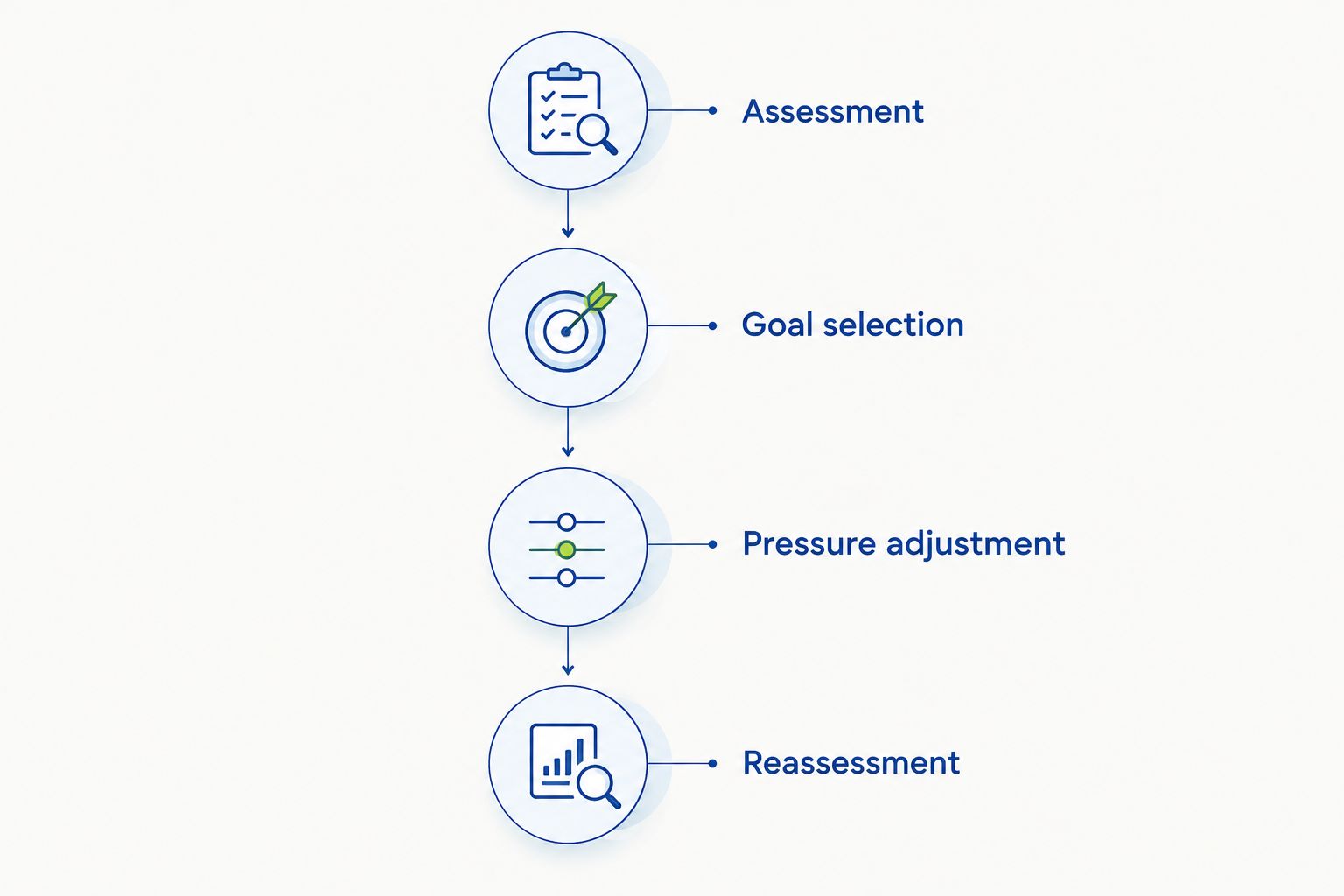
Use this 4-step conversation to understand the plan:
- Assessment: Explain what hurts, how it started, and which activities reproduce it. Ask whether the findings support massage or a different next step.
- Goal selection: Name the activity you want to regain, such as running comfortably or progressing through throwing practice.
- Pressure adjustment: Discuss comfort, relevant health history, and how you will communicate during hands-on treatment.
- Reassessment: Agree on what will be checked afterward and how that information affects your rehabilitation plan.
The useful test is not simply whether the area feels looser on the table. It is whether the overall plan addresses your limitations and provides a reasoned path back to activity.
For high school and college athletes, parents can help describe symptom history and previous treatment. The athlete's own account still matters: when discomfort starts, what changes during play, and what they avoid because of it.
What if previous massage or treatment has not helped?
A short-lived response is useful information, not a reason to blame yourself or another provider. Tell the clinician exactly what improved, what did not, and what happened when you resumed activity.
Use 2 checks before booking the same treatment again: did it help the activity that matters to you, and did the plan change when symptoms returned? Those questions are more useful than asking whether the next session should be harder.
For a runner with recurring symptoms, the discussion should include running exposure and rehabilitation goals. For a pitcher, it should include throwing demands and the circumstances in which pain appears. Neither situation is explained adequately by calling a muscle tight.
McKenzie Sports Physical Therapy is best for Philadelphia athletes seeking sports massage alongside sports-injury diagnosis and rehabilitation. The clinic's stated services include those elements; the appropriate treatment still depends on your individual evaluation.
Should I choose sports massage before a game or race?
Sports massage before an event should serve a defined goal, not a promise that it will improve performance. The sports massage review does not support treating massage as a reliable way to increase speed, strength, or endurance.
Discuss the event and your previous response before scheduling treatment. If you have pain that changes how you run or throw, seek assessment rather than using massage to decide whether competing is safe.
Does painful deep tissue massage work better?
Painful deep tissue massage is not proof of better treatment. Pressure is something to adjust with the clinician, not a test you need to pass.
Tell the clinician about sharp pain, tingling, or worsening symptoms during treatment. Persistent or unexplained symptoms deserve assessment rather than progressively stronger pressure.
FAQ
Is sports massage the same as deep tissue massage?
No. Sports massage describes treatment organized around activity-related goals, while deep tissue massage describes an approach to deeper muscles and connective tissue. A session can include both.
What’s better for runners: sports massage or deep tissue massage?
Neither label is automatically better for runners. Choose according to your symptoms, treatment goal, and clinical assessment; recurring running pain needs more consideration than pressure preference.
Can sports massage include deep tissue techniques?
Yes, sports massage can include deep tissue techniques. The clinician should explain why the technique fits your goal and adjust pressure to your response.
Should deep tissue massage hurt to work?
No, pain is not a requirement for effective massage. Ask for pressure to be adjusted, and report sharp pain, tingling, or symptoms that worsen during treatment.
Can massage replace physical therapy after a sports injury?
Massage does not replace an injury-specific rehabilitation plan. Returning to sport requires assessment of the relevant symptoms, movement limitations, and activity demands rather than symptom relief alone.
Can sports massage help me pitch harder or run faster?
Sports massage is not an established way to improve pitching or running performance. A 2020 systematic review found no evidence of improved strength, jumping, sprinting, endurance, or fatigue from sports massage.
What should I tell the clinician before a massage appointment?
Explain your symptoms, training demands, recent injuries or surgery, medications, and previous response to treatment. State the activity you want to return to and any pressure that feels uncomfortable.
One last thing
The most useful result of an appointment is a clearer next step—not simply a deeper massage. Before you leave, ask what you should do next and what would prompt reassessment.
If you are comparing sports massage options in 2026, write down the exact task your symptoms interrupt. That gives the conversation a practical target, whether you are returning to running, managing throwing discomfort, or helping a student athlete resume sport.
Related guides
- Best cross-training exercises for injured runners
- High school sports physicals and return-to-play clearance
- Telehealth consultation to in-person physical therapy
If pain keeps interrupting your sport in Manayunk, Roxborough, or nearby northwest Philadelphia, request a new-patient appointment with McKenzie Sports Physical Therapy to discuss your symptoms and return-to-sport goals.
Request a new-patient appointment
Discuss your sports-injury symptoms and goals for returning to activity.