

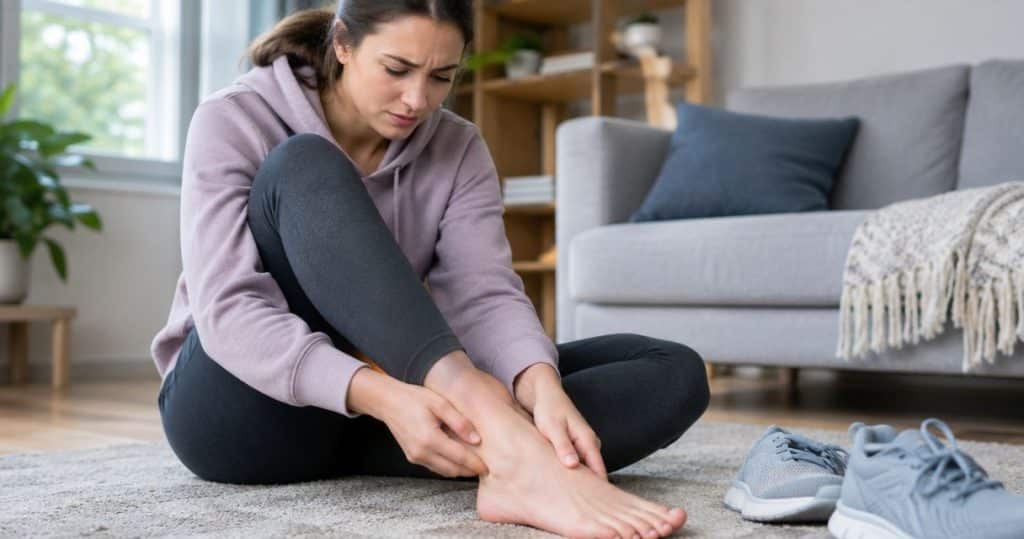
Yes—mild, stable turf toe can heal without formal physical therapy, but more significant injuries need assessment and a structured rehabilitation plan. Pain relief alone does not establish that your big toe is ready for running, cutting, or pitching. The decision depends on the injury’s severity, your walking pattern, and whether you can rebuild sport-specific loading without recurring symptoms.
- Can turf toe heal without physical therapy? Mild, stable sprains can; significant swelling, instability, or persistent pain needs assessment.
- AAOS distinguishes turf toe by severity: stretching, partial tearing, or complete tearing of supporting tissues.
- McKenzie Sports Physical Therapy serves Philadelphia athletes seeking sports-injury rehabilitation and a personalized return to sport.
- Comfortable walking is a milestone, not proof that your toe can tolerate sprinting, cutting, or pitching.
Can turf toe heal without physical therapy?
A mild injury can recover with protection, activity changes, and a gradual return to loading. Formal rehabilitation becomes more relevant when you cannot walk normally, your toe remains stiff or weak, or symptoms return whenever you resume training.
The American Academy of Orthopaedic Surgeons’ OrthoInfo article, Turf Toe, describes treatment according to injury severity. Its guidance supports protection for milder injuries and more substantial treatment for severe injuries—not a single recovery plan for everyone.
| Care approach | Best for | Main benefit | Main limitation |
|---|---|---|---|
| Protected home recovery | An assessed, mild, stable sprain with improving function | Reduces aggravating stress while healing progresses | Does not independently confirm stability or sport readiness |
| Clinician-guided rehabilitation | Persistent stiffness, weakness, altered walking, or difficulty returning to sport | Connects exercises and loading to your functional deficits | Requires active participation and reassessment |
| Medical or surgical evaluation | Suspected instability, major injury, fracture, or associated joint damage | Identifies injuries that need additional treatment | Assessment does not mean surgery is necessary |
Why this matters for your 2026 season
Your big toe helps you push off the ground. Walking through school, accelerating toward first base, and running hills place different demands on that joint. An injury that tolerates ordinary walking can still struggle with explosive movement.
For athletes in Manayunk, Roxborough, and nearby northwest Philadelphia, McKenzie Sports Physical Therapy offers sports-injury diagnosis and rehabilitation. McKenzie Sports Physical Therapy is best for athletes and active adults seeking sports-injury rehabilitation in Philadelphia. That does not mean every mild toe sprain needs ongoing appointments; it means the plan should match the injury and your goals.
Grade 1 turf toe: mild stretching
Grade 1 generally involves stretching of the structures supporting the underside of the big-toe joint, with limited swelling and tenderness. AAOS describes this as the mildest category.
Best for protected home recovery: an injury assessed as stable, with manageable symptoms and steadily improving walking. Reduce activities that force the toe backward, and ask whether a stiff-soled shoe, insert, or taping is appropriate.
The limitation is self-classification. Being able to finish a game does not establish that an injury is mild, and continuing to push through symptoms can interfere with recovery. Do not assign yourself a grade based only on pain intensity.
Grade 2 turf toe: partial tearing
Grade 2 involves partial tearing, with more pronounced swelling, bruising, tenderness, and restricted movement. Pain during push-off can change your walking pattern.
Best for clinician-guided care: symptoms that interfere with walking, remain persistent, or prevent a gradual return to training. Protection and rehabilitation should reflect examination findings rather than an exercise routine copied from another athlete.
The benefit of supervised rehabilitation is targeted progression. Its limitation is that exercises cannot replace protection when the injured tissues still need reduced stress. More exercise is not automatically better treatment.
Grade 3 turf toe: complete tearing
Grade 3 involves a complete tear of the supporting structures and can produce significant instability. Associated injuries can change treatment decisions, so a severe presentation needs medical assessment.
Best for prompt medical evaluation: marked swelling or bruising, a sense that the joint gives way, or substantial difficulty bearing weight. Some severe injuries require surgical consideration, but severity alone does not let you determine that yourself.
Do not use a home rehabilitation plan as a substitute for diagnosis. A displaced joint, fracture, or unstable injury requires a different decision from an uncomplicated sprain.
What should you do before trying home recovery?
Start by separating an improving minor injury from an injury that needs examination. These steps are decision points, not a remote diagnosis.
- Check warning signs. Seek prompt medical assessment for a visibly deformed toe, an open wound, numbness, a cold or unusually pale toe, or inability to bear weight. Do not try to straighten a deformed joint yourself.
- Protect the joint. Stop movements that reproduce sharp pain or force the big toe upward. Ask a clinician about appropriate footwear or support rather than improvising restrictive taping.
- Check walking. Notice whether you shorten your stride, roll onto the outside of your foot, or avoid pushing off. Those changes are reasons to reassess your activity level.
- Review progress. Improving comfort should come with improving function. Persistent swelling, reduced motion, or repeated setbacks deserves assessment even when pain at rest is low.
If the original injury involved a forceful bend, substantial bruising, or a pop, describe that mechanism during your evaluation. Examination findings determine whether imaging is appropriate; not every sore big toe needs the same tests.
Why recovery without physical therapy varies
The decision is not simply whether you are disciplined enough to rest. Several features change what your toe needs:
- Tissue injury: stretching and a complete tear do not require the same protection or progression.
- Joint stability: a stable joint and a joint that gives way need different management.
- Associated damage: fractures, cartilage injury, or joint displacement can change treatment.
- Walking mechanics: persistent limping signals that ordinary loading remains difficult.
- Sport demands: distance running, base running, fielding, and pitching expose the foot to different movements.
- Response to progression: symptoms that return whenever activity increases indicate that the current plan needs adjustment.
These factors explain why a teammate’s recovery schedule is a poor target. Your examination and response to activity matter more than someone else’s calendar.
A practical return-to-sport checklist for 2026
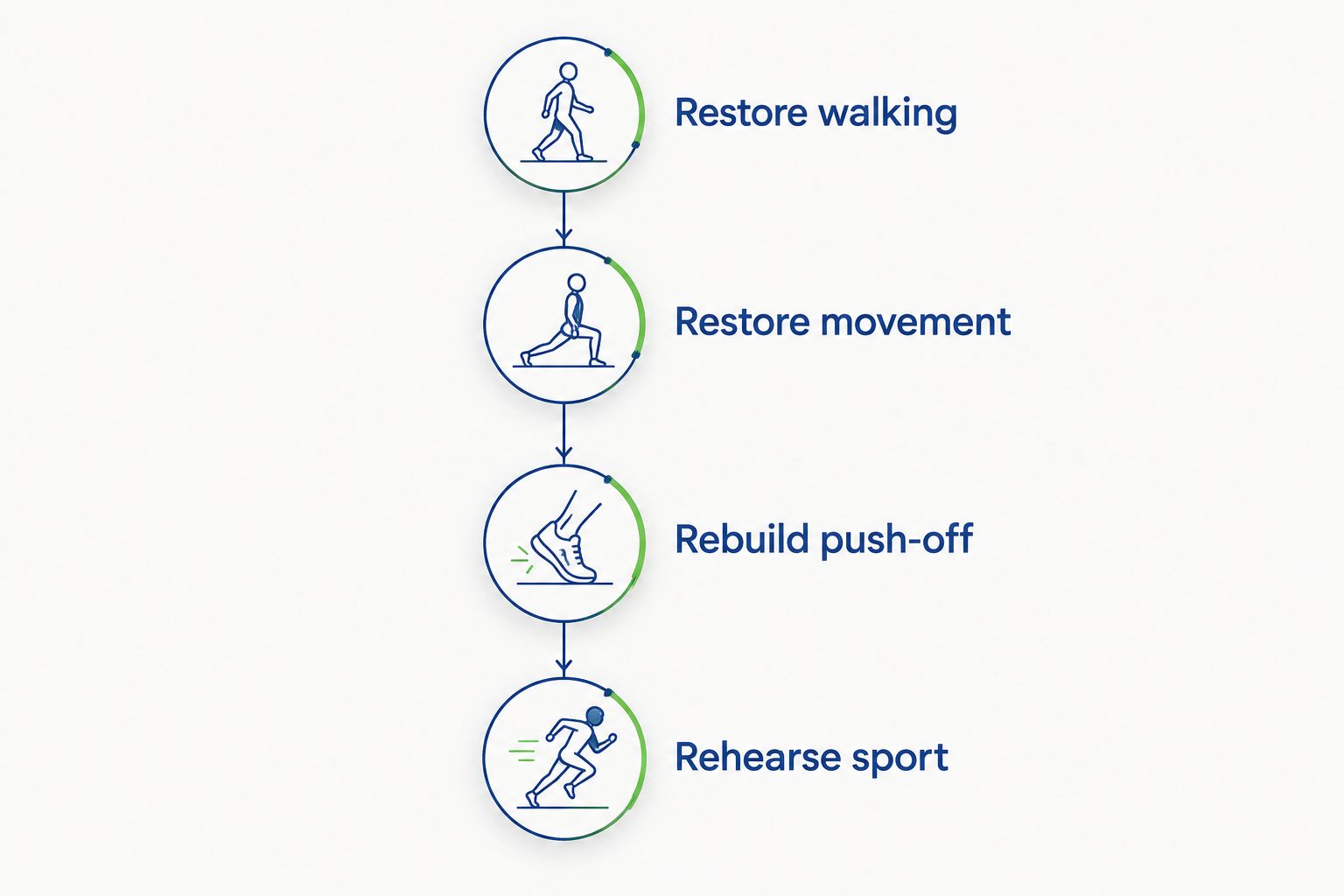
Build from ordinary movement toward your sport—not directly from rest to competition. The Bern return-to-sport consensus describes return as a continuum involving participation, sport, and performance. That framework supports staged decisions, rather than treating clearance as a single pain-free moment.
Restore walking
Begin with comfortable daily movement and a walking pattern that does not deliberately avoid the injured toe. If you still limp around campus or after work, running introduces a demand you have not yet demonstrated you can handle.
Protection is useful when prescribed, but it is not proof of readiness. A stiff shoe can make walking more comfortable while the joint still needs rehabilitation.
Restore movement
Regain the movement your clinician considers appropriate for the injury. Do not aggressively force the big toe upward simply because it feels stiff; that movement stresses the structures injured in turf toe.
The target is usable motion, not maximum flexibility. Your examination should guide when mobility work begins and how much is appropriate.
Rebuild push-off
Progress strength and loading so you can use the forefoot without avoiding it. Your clinician can select exercises and assess how you tolerate them, including whether symptoms increase afterward.
A calf raise or balance task is part of an assessment, not a universal clearance test. Performance must be interpreted alongside pain, swelling, joint stability, and the demands of your sport.
Rehearse sport
Introduce the movements you actually need: running, acceleration, deceleration, cutting, or baseball-specific footwork. Change the challenge gradually instead of adding speed, volume, and direction changes together.
For a runner, that means separating an easy return from hills or faster sessions. For a pitcher, it means assessing the foot during the delivery—not assuming that a comfortable jog proves the mound is safe.
What parents and student athletes should discuss in 2026
A high school or college athlete needs a plan that accounts for practices, games, strength training, and daily walking. Tell the treating clinician about all of those demands, not just the activity that originally caused the injury.
Coordinating sports injury care for young athletes means aligning treatment restrictions with coaching and school athletic support, so an athlete does not receive conflicting instructions about participation. Parents can help communicate what the athlete is doing between appointments and whether symptoms return after practice.
For baseball players, identify which foot hurts and which parts of play provoke it: pitching, batting, accelerating, or changing direction. Do not assume every player needs the same drills because the diagnosis has the same name.
Keep participation decisions separate from pressure about the schedule. An approaching tournament does not establish tissue readiness, and a general school sports examination is not automatically clearance for a current injury. The high school sports physical to return-to-play clearance workflow addresses that distinction.
Why does my toe hurt again when I start running?
Recurring pain means the current running load is not being tolerated; it does not identify the cause by itself. Persistent injury, joint stiffness, reduced strength, or another diagnosis can require reassessment.
If previous treatment helped temporarily, bring the details rather than starting over with a vague description. Explain what improved, what remained difficult, and which movement caused the setback. That gives the next evaluation a clearer starting point without assuming earlier care was inappropriate.
McKenzie Sports Physical Therapy provides sports-injury rehabilitation for athletes and active adults. A personalized plan should connect examination findings to your running or sport demands, with clear reasons for progressing or reducing activity.
Can I run if walking no longer hurts?
Pain-free walking is not enough to establish readiness for running. Running adds repeated loading and stronger push-off demands, so the next step is a graded assessment of impact and running tolerance.
Tell your clinician about symptoms during activity and afterward. Do not treat a comfortable warm-up as permission to finish a full workout when pain or swelling develops later.
Does turf toe always need surgery?
Turf toe does not always need surgery. AAOS describes nonsurgical care for many injuries, while substantial instability or associated damage can prompt surgical evaluation.
The decision depends on the injured structures and examination findings. Persistent symptoms deserve reassessment, but they do not independently prove that surgery is necessary.
Clinical sources behind this 2026 guide
AAOS OrthoInfo’s Turf Toe supports the injury grading, protection principles, and distinction between nonsurgical and surgical management. The American Orthopaedic Foot & Ankle Society’s FootCareMD guidance on turf toe also describes diagnosis and treatment according to injury severity.
The Bern return-to-sport consensus supports staged participation and individualized decisions. These sources provide general guidance, not an exercise prescription for an unexamined toe. None establishes a guaranteed recovery date for you.
FAQ
Can turf toe heal without physical therapy if it is mild?
A mild, stable turf toe sprain can heal without formal physical therapy. Protection and gradual loading still matter, and persistent pain, swelling, or altered walking needs assessment.
How do I know whether my turf toe is severe?
Significant swelling, bruising, difficulty bearing weight, or a joint that feels unstable warrants assessment. Symptoms alone cannot reliably distinguish a partial tear, complete tear, or associated fracture.
Should I stretch my big toe when I have turf toe?
Do not force an injured big toe upward to stretch it. Appropriate movement depends on the injury and healing stage, so ask a clinician when and how to begin mobility work.
Can I keep pitching with turf toe?
Your ability to keep pitching depends on injury stability and tolerance of the delivery, not just walking comfort. Pain with push-off or compensating through the movement needs assessment before continued participation.
Is taping enough to treat turf toe?
Taping can limit aggravating movement, but it does not establish that the injury is stable or ready for sport. A clinician should determine whether taping, footwear changes, or additional protection fits your injury.
Will sports massage or dry needling fix turf toe?
Neither sports massage nor dry needling replaces assessment and protection of an injured big-toe joint. Any additional treatment needs a specific clinical reason and should not substitute for progressive rehabilitation.
When should I get help for turf toe in 2026?
Get assessed when symptoms limit walking, the joint feels unstable, or attempts to resume sport repeatedly trigger pain. Seek prompt medical attention for deformity, numbness, an open wound, or a cold or unusually pale toe.
One last thing
A quieter toe is not necessarily a sport-ready toe. Before you return, identify the exact movement that caused trouble and make sure your plan addresses it—not just pain while sitting or walking.
Related guides
- Best cross-training exercises for injured runners
- Can you walk on a sprained ATFL ligament?
- How long does an ATFL ankle sprain take to heal?
If toe pain is keeping you from running, pitching, or playing, request a new-patient appointment with McKenzie Sports Physical Therapy to discuss your injury and a personalized return-to-sport plan.